

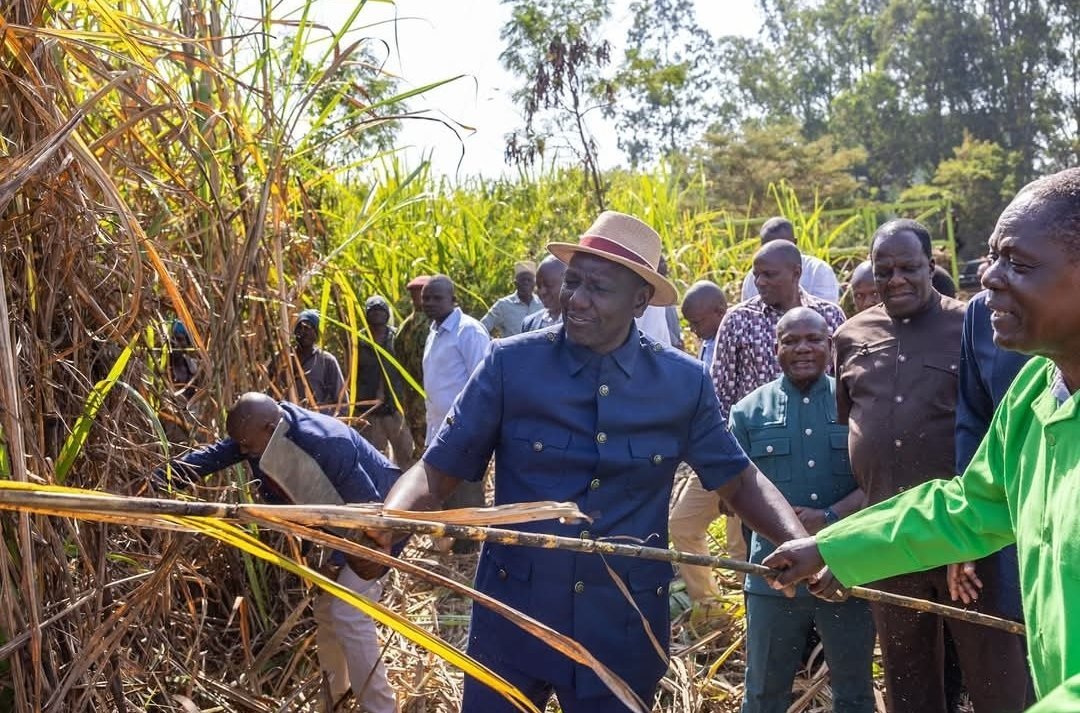
After over two decades of protected trade, the sugar industry is stepping confidently onto a new regional stage. This is after the government decided to formally exit the Common Market for Eastern and Southern Africa (COMESA) Sugar Safeguard regime, which lapsed on November 30th, 2025.
This marked the end of a 24-year chapter designed to stabilize and restructure the sector, which now looks ready to compete within COMESA.
The safeguard, initially sought in 2001 under the COMESA Treaty, served as a critical temporary instrument. It allowed Kenya to impose restrictions on sugar imports while implementing deep structural reforms.
Over eight extensions, the country worked to meet strict benchmarks set by the COMESA Council of Ministers, focusing on productivity investments, sector restructuring, and infrastructure development.
According to the Kenya Sugar Board, these obligations have now been fully met, concluding a reform cycle with its core objectives achieved. The foundation of this new-found confidence is a fundamental shift in policy and perspective. For years, the focus has moved deliberately from pure protection to building competitiveness anchored on value addition, efficiency, and diversification.
The global sugar market has evolved, and Kenya is aligning with it. Sugarcane is no longer just a source of table sugar but primarily an industrial raw material. The real value, and the key to competing, lies in integrated processing, turning molasses into ethanol, converting bagasse into electricity for the national grid, and manufacturing paper, board, and industrial alcohols.
These diversified revenue streams significantly lower the effective cost of sugar production, insulate farmers from price volatility, and create stronger, more stable balance sheets for millers.
In fact, the sector has recorded a powerful recovery, with sugarcane acreage expanding by 19.4% to nearly 290,000 hectares. Consequently, sugar production has surged by an impressive 76%, from 472,773 metric tonnes in 2022 to 815,454 metric tonnes in 2025. This growth is attributed to favourable rains, improved access to certified seed cane, targeted fertiliser subsidies, and enhanced factory efficiencies.
However, despite this remarkable progress, domestic production of approximately 815,454 tonnes still trails the national annual demand of about 1.1 million tonnes. The Kenya Sugar Board acknowledges that miller capacity expansion and the rehabilitation of factories, including those under new long-term private leases, will require time to be fully optimized.
Therefore, the government will continue to supplement local supply through controlled imports from both COMESA and other approved sources. This balanced framework is designed to ensure price stability for consumers and market certainty for producers without undermining local production, while accounting for unpredictable climate patterns and regional supply fluctuations.
According to Jude Chesire, CEO of the Kenya Sugar Board, the end of the safeguard does not mean an end to support. The Board will continue to provide robust regulatory oversight, market coordination, and farmer protection to ensure an orderly and sustainable industry.
As capacity and farm productivity continue to climb, Kenya is projected not only to meet domestic demand but to achieve and surpass self-sufficiency, positioning itself for surplus production and regional export competitiveness in its new phase.
The exit from the safeguard aligns with and reinforces the irreversible reforms already underway, particularly the transition of former state-owned mills to private leasing. A move intended to inject professionalism, accountability, and long-term investment into the industry.
