

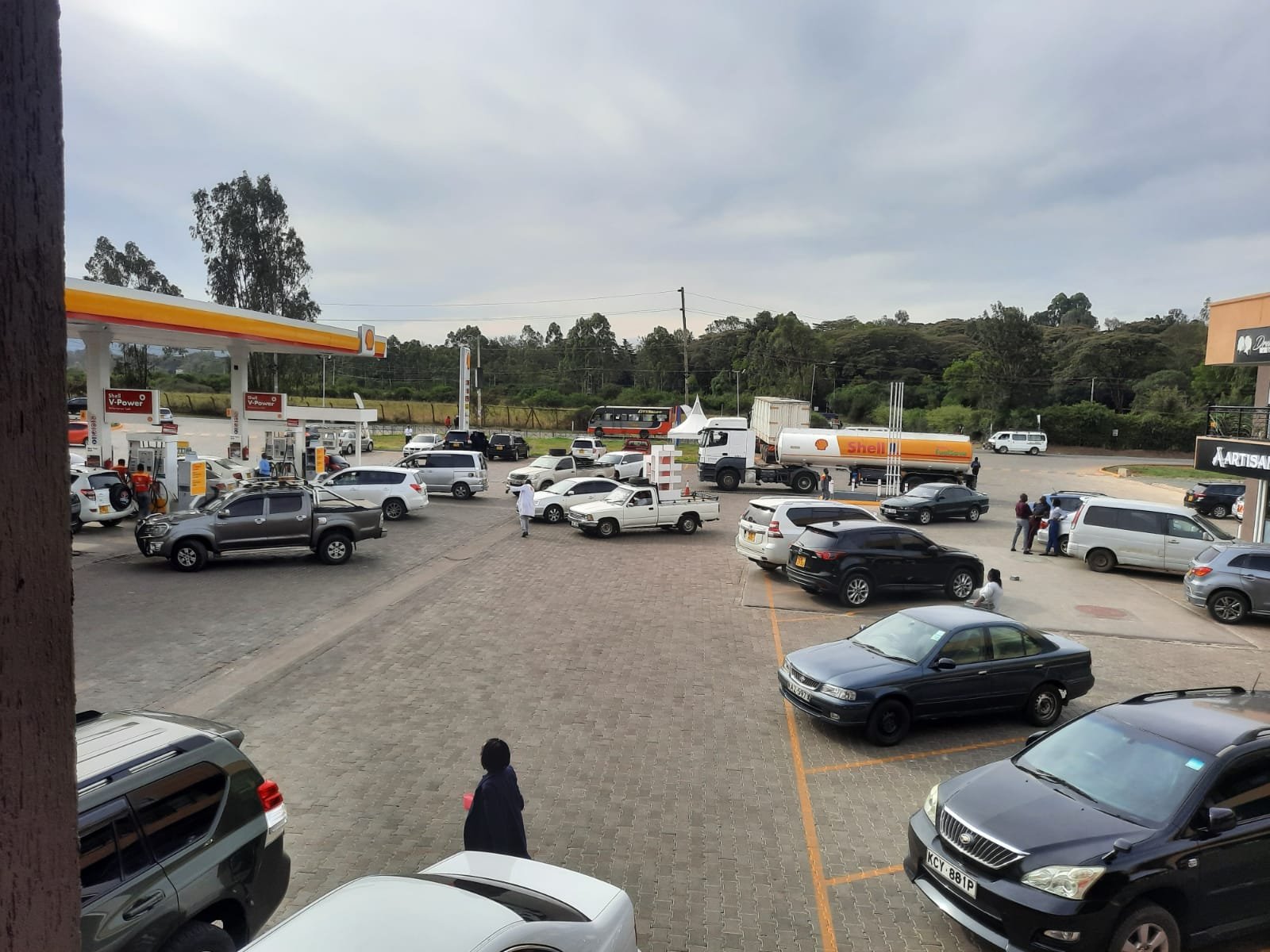
Fuel prices in Kenya are likely to see an increase after the eight core architects of global oil policy within the Organization of the Petroleum Exporting Countries and its allies (OPEC+) decided to maintain current production levels through the first quarter of 2026.
The decision, made by Saudi Arabia, Russia, the United Arab Emirates, Kazakhstan, Kuwait, Iraq, Algeria, and Oman, which account for over half of the world’s oil, cements the stance adapted in November 2025 when the group opted to temporarily suspend output increases for the quarter in response to seasonally weaker demand during the Northern Hemisphere winter.
This short-term commitment to steady output follows a tumultuous year for crude, which saw prices plummet by more than 18% in 2025, the steepest annual decline since the pandemic-shocked markets of 2020.

The primary driver of this sustained downturn has been a pervasive anxiety among traders and analysts regarding a fundamental imbalance, the specter of excess supply relentlessly haunting the market.
This current stance represents a pivot from the group’s earlier strategy in 2025, when, in a bid to recapture market share relinquished during years of voluntary restraint, OPEC+ collectively elevated its production targets by approximately 2.9 million barrels per day.
That increase was equivalent to nearly 3% of global demand, a significant volume whose gradual return to the market has contributed to the current pressure on prices. Simmering geopolitical tensions in the background have also amplified the significance of this decision.
For instance, this meeting occurred amidst rare public discord between two of its most influential members, Saudi Arabia and the United Arab Emirates. The longstanding allies find themselves at odds over the protracted conflict in Yemen, with Riyadh and Abu Dhabi backing opposing factions.
Recent military actions and the UAE’s subsequent withdrawal of remaining forces have laid bare the strategic strain. Simultaneously, the long-term potential of Venezuela, holder of the world’s largest proven reserves, presents a distant uncertainty.
While the nation sits atop the world’s largest proven oil reserves, its current contribution to global supply is negligible, at less than 1%. And even though the U.S. President Donald Trump hints at a potential flood of investment to rebuild its crippled energy infrastructure, following Nicolás Maduro Moros’s capture, this will take years to materialize.
Despite these fissures, the group’s immediate focus remains fixed on the daunting fundamentals of supply and demand. In holding output steady, OPEC+ is choosing a path of price stabilization over political reaction.
The current rifts, while notable, are viewed through a lens of pragmatic detachment when it comes to the quarterly production calculus. The International Energy Agency (IEA) provided a roadmap of these challenges in its October report, outlining the dual forces shaping the market; the measured reintroduction of barrels previously withheld by OPEC+ itself, and the relentless growth in supply from producers outside the alliance.
This non-OPEC+ surge is led by the United States, but significantly bolstered by robust increases from Brazil, Canada, Guyana, and Argentina, creating a new front of competition.
In a subsequent December update, the IEA provided a quantified glimpse of the looming imbalance, forecasting a global oil surplus of about 3.8 million barrels per day for 2026, a figure tempered only marginally by stronger-than-expected demand and supply constraints linked to sanctions.
Consequently, OPEC+’s decision to stand pat is a deliberate exercise in risk management. It is an acknowledgment that in a market groaning under the weight of surplus, the safest course is often to make no sudden moves.
The first-quarter production freeze provides the alliance with crucial time to gauge the durability of demand, the persistence of non-OPEC+ production gains, and the evolution of the geopolitical landscape that frames it all.
