

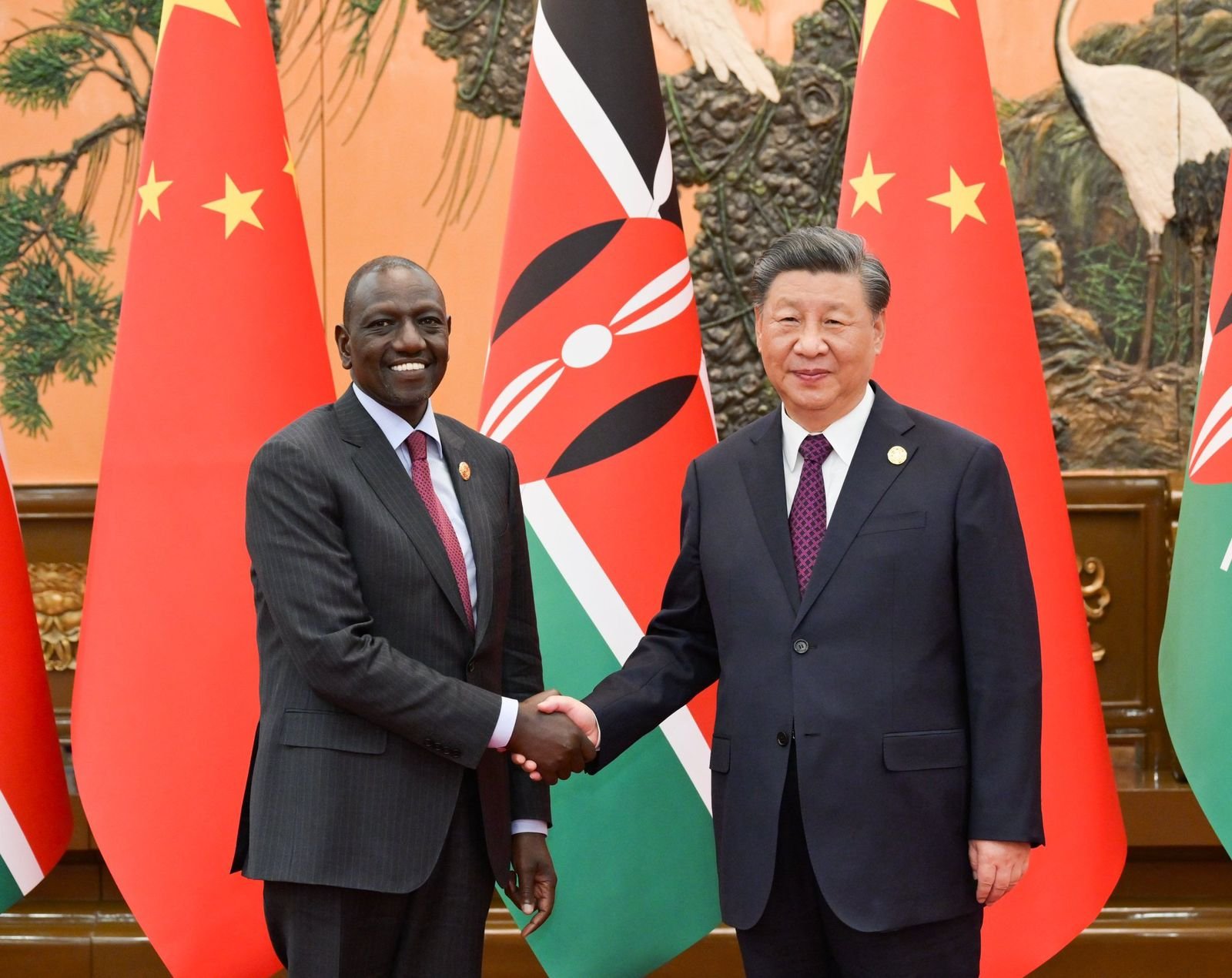
Kenya has secured a preliminary bilateral trade agreement with China, following months of intensive negotiations and diplomatic engagement aimed at expanding market access and strengthening the country’s position in the global economy.
The deal grants 98.2% zero-duty access for Kenyan goods in the Chinese market and addresses a longstanding challenge that has historically placed developing countries like Kenya at a comparative disadvantage.
While China had recently extended duty-free and quota-free access to all African goods, this provision primarily favored Least Developed Countries. However, with this deal, Kenya will no longer be left out.

By aligning its access privileges with those enjoyed by some of its East African Community (EAC) neighbours and other African nations, the agreement levels the playing field and opens a door to immense economic potential.
The zero-duty access will act as a catalyst for diversification. It will empower local exporters, particularly in the agricultural sector, to compete more effectively in one of the world’s largest consumer markets, moving beyond common export baskets. It is also anticipated to unlock tangible, transformative benefits for Kenyans.
According to Lee Kinyanjui, Cabinet Secretary for Investments, Trade and Industry, the initiative is expected to generate considerable employment opportunities and stimulate economic growth.
The government aims to translate diplomatic success into improved livelihoods and greater prosperity for its citizens by reducing trade imbalances and fostering export-led expansion.
This deal continues Kenya’s win in trade and talks volume of its growing influence on the global stage. In fact, it comes soon after the country was explicitly excluded from the US State Department’s decision to indefinitely suspend immigrant visa processing for nationals from 75 countries, effective January 21, 2026.
The move is set to affect 26 African countries including EAC members like the Democratic Republic of Congo, Tanzania, Somalia, South Sudan, Rwanda and Uganda. Being excluded from the list provides immediate relief to Kenyans and implicitly affirms the country’s status as a trusted regional partner to the U.S in this era of self interests.
2026 is starting with Kenya walking away a winner. In a world where countries often have to pick sides, the East African giant is smartly playing the middle. The country’s decision not to pick one side over the other and instead successfully build strong and beneficial relationships is clearly paying off.
These parallel successes are definitely poised to yield substantial economic dividends and enhance the nation’s stature, showcasing its growing influence as a discerning and consequential actor on the global stage.
