

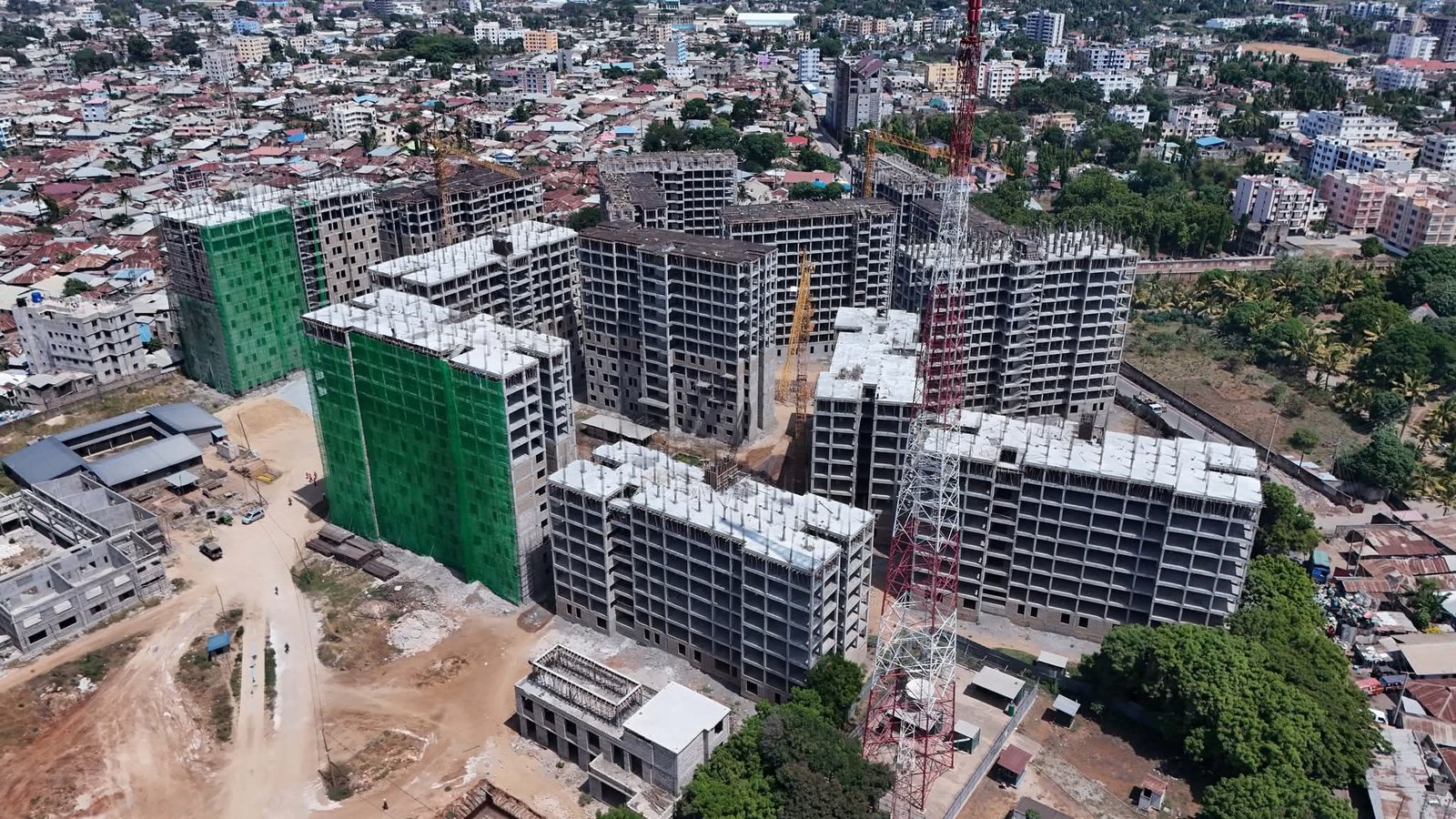
The World Bank has sharply reduced its financial support package for the Affordable Housing Finance Project, slashing it from Sh174.19 billion ($1.35 billion) to a total of Sh117.46 billion ($910.32 million) in just a couple of months. The major changes were made to the project’s commercial and development finance components.
Total financing from the International Bank for Reconstruction and Development (IBRD) was reduced from Sh35.48 billion ($275 million) to Sh16.13 billion ($125 million) while commercial financing was reduced from Sh116.13 billion ($900 million) to Sh46.45 billion ($360 million). On other other hand, total financing from International Development Association (IDA) was increased from Sh12.90 billion ($100 million) to Sh45.16 billion ($350 million).
These revised figures come at a time that public debt stands at almost 70% of GDP and debt service continues to absorb over 70% of revenues. In fact, interest payments continue to rise, having moved from 2.7% of GDP in FY2014/15 to 5.6% in FY2024/25. This ends up leaving very little room for development spending.
Despite the reduction, the restructured operation retains its core mission to expand access to housing finance for underserved Kenyans. This is set to benefit 75% of formal workers earning below Sh50,000 a month for whom a traditional mortgage is a distant dream.
A significant portion, Sh27.10 billion ($210 million), will still flow as a line of credit to the Kenya Mortgage Refinance Company (KMRC) to refinance mortgages. Crucially, this component now explicitly pushes for innovation, exploring micro-loans and incremental mortgages designed for those outside the formal wage sector. The most profound shifts, however, lie in the project’s other pillars. A Sh16.13 billion ($125 million) investment will go to land administration.
It will aim to finally untangle the bureaucratic and legal knots that make property registration slow, expensive, and unreliable. By tying disbursements to performance-based conditions, the World Bank is essentially betting that streamlining land laws and fully digitizing records through the Ardhisasa platform will do more to stimulate housing supply than raw cash alone.
There is also a Sh17.42 billion ($135 million) sovereign sustainability-linked loan (SLL) channeled through the National Treasury. This instrument directly ties the cost of borrowing to the performance on national climate and development goals, such as reducing deforestation and expanding rural energy access. It is a deliberate attempt to align fiscal management with environmental impact, creating a financial incentive for the government to meet its own policy targets.
This approach seeks to lower borrowing costs as well as set a precedent for private sector issuers, demonstrating that sustainability can be a driver of financial value. With only Sh645.15 million ($5 million) allocated for technical assistance and project management, every dollar is now expected to work harder, supporting product development, market readiness assessments, and the coordination required to keep the complex, multi-agency initiative on track.
Ultimately, the scaled-down project is a calculated gamble. The World Bank is forcing a focus on the foundational issues that have long plagued the housing sector such as opaque land rights, slow administrative processes, and a lack of innovative financial products for the informal sector.
While the reduction will be felt, the funding is enough to start handling some of the challenges in the sector. The success will depend on the government’s ability to implement long-promised reforms and leverage this smaller public investment to crowd in genuine private capital.
