

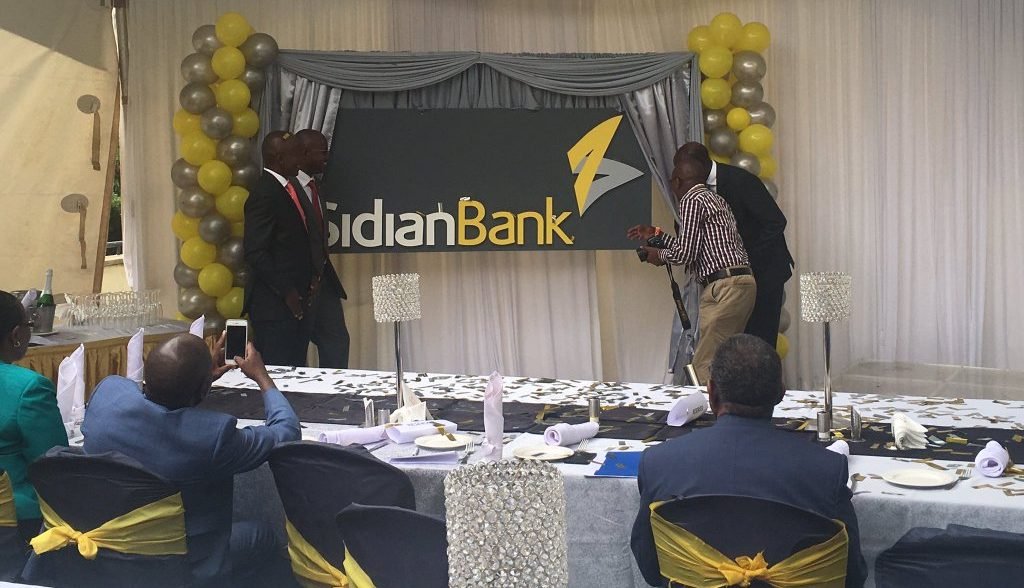
Centum Investment Company has finally exited Sidian Bank marking the end of one of the region’s longer-running private equity relationships in Kenya’s banking sector.
This after Centum announced it completed the sale of its entire stake in Bakki Holdco Limited, the special purpose vehicle through which it held an indirect interest in Sidian Bank.
The move concludes Centum’s association with the bank, bringing to a close a 22-year investment that dates back to the early 2000s. Access Bank Plc, the Nigerian banking group is the largest shareholder having acquired a controlling stake through its investment vehicle, coupled with other private investors.
“The financial effects of the transaction will be reflected in Centum’s next financial reporting cycle for the fiancial year ending 31 March 2026,”Centum boss James Mworia told shareholders in an adevrt signed 12th March, 2026.
Bakki Holdco Limited held a 27.2 per cent stake in Sidian Bank, with Centum owning half of the holding vehicle. Through this structure, Centum maintained an indirect shareholding in the lender alongside other investors.
While financial details of the transaction were not immediately disclosed, the exit reflects Centum’s ongoing strategy of recycling capital from mature investments into new opportunities.
However, Centum owned 50 per cent of Bakki Holdco, which in turn held a 27.2 percent stake in Sidian, giving the Nairobi-based investment company an effective holding of about 13.6 percent in the bank. Based on earlier estimates that placed the transaction value at roughly Sh1.9 billion, Centum’s share of the deal may be worth about Sh950 million, reflecting the value of its half stake in the holding vehicle.
“The company expects the sale to result in a modest financial gain relative to the previously reported carrying value of Bakki Holdco Limited in Centum’s books,” said Mworia.
This indicates that the divestment will deliver a modest gain compared with the carrying value recorded in its books.
Centum, which is closely linked to the late tycoon Chris Kirubi, is one of East Africa’s largest listed investment companies, and has in recent years been actively restructuring its portfolio as it seeks to unlock value and strengthen liquidity.
The company has pursued exits from several long-held investments as part of a broader effort to focus on sectors where it believes it can generate stronger growth and returns.
Its relationship with Sidian Bank has been part of the firm’s financial services exposure, a sector that has undergone significant transformation in Kenya over time. In the last two decade, the banking industry has experienced consolidation, regulatory reforms, and rapid digitization, all of which have reshaped the competitive adge in the sector which is currently bullish at the Nairobi Stocks Exchange (NSE).
Originally established as K-Rep Bank, Sidian built a reputation as a microfinance-focused institution before transitioning into a fully fledged commercial bank serving small and medium-sized enterprises (SMEs).
Sidian has recently sought to position itself as a key financial partner for Kenya’s SME sector, offering tailored banking products and digital financial services aimed at entrepreneurs and growing businesses.
The departure is the end of its direct involvement in the bank’s shareholder structure, as the institution continues to operate within Kenya’s competitive mid-tier banking segment.
The divestment now frees up some capital, funds which can now be redeployed into other investments across its core sectors, which include real estate, private equity, financial services, and marketable securities.
