

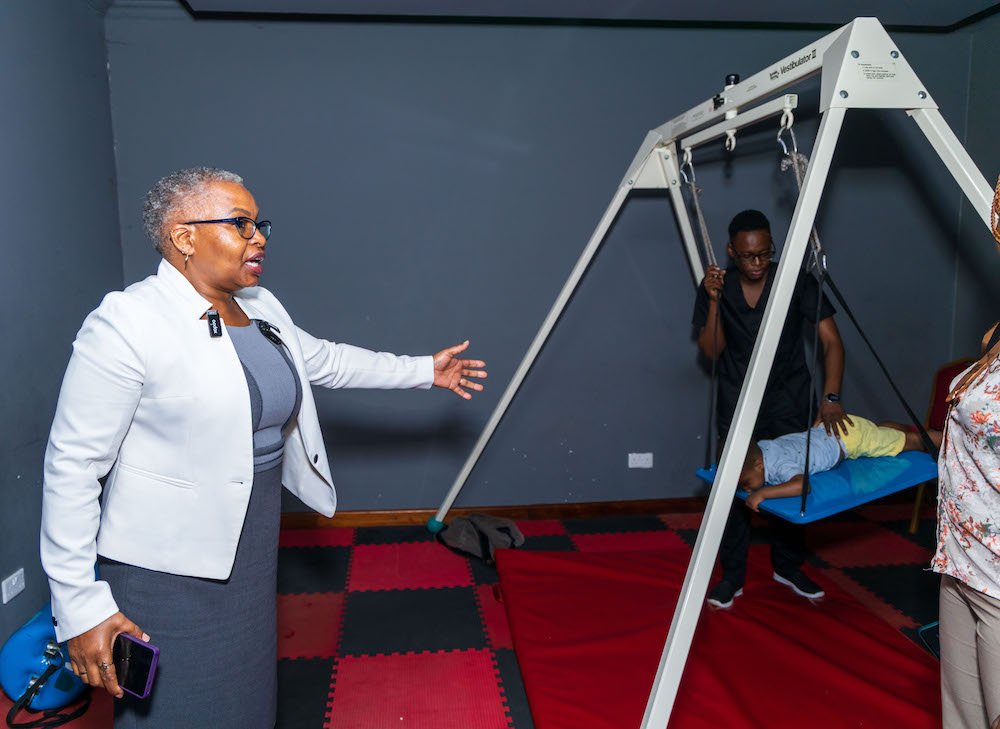
The Kenya Institute of Special Education (KISE) and Huawei have reaffirmed their commitment to leveraging sustainable innovations and artificial intelligence (AI) to promote inclusive education, particularly for learners with disabilities.
KISE Research and Innovation Coordinator, Dr Lynett Ong’era, said the partnership aims to transform special needs education through technology, including support for rehabilitation units, assessment centres, and digital learning platforms.
Dr Ong’era noted that conditions such as autism, alongside visual, hearing, and learning impairments, require increased attention, underscoring the need to develop assistive devices and technologies as part of a deliberate investment in addressing social challenges.

“You have to understand the intervention required,” she said during a media engagement on Friday, April 24. “There are children who cannot sit down and take instructions in the usual way. There are assessors who can take note of that and provide solutions. Assessment is very critical because depending on the need of the child, we are able to help them learn and perceive accordingly.”
Dr Ong’era added that despite existing knowledge gaps in ASAL areas and other underserved regions, progress has been made in applying AI for disability support since KISE partnered with Huawei in 2024.
“We are looking at deploying technology to enable people with disabilities to perform activities on their own instead of relying on caregivers,” Dr Ong’era said, noting that there is still inadequate personalisation of assistive devices for people with disabilities.
Huawei’s Policy and Partnerships Lead, Adam Lane, emphasised that inclusion must remain central to innovation.
“Technology has to be used for something… we want to create jobs, incomes, and educate not only in Kenya, but across the world. We want to do the best for people with visible and invisible disabilities. Almost every family knows someone living with a disability,” Lane said.
