

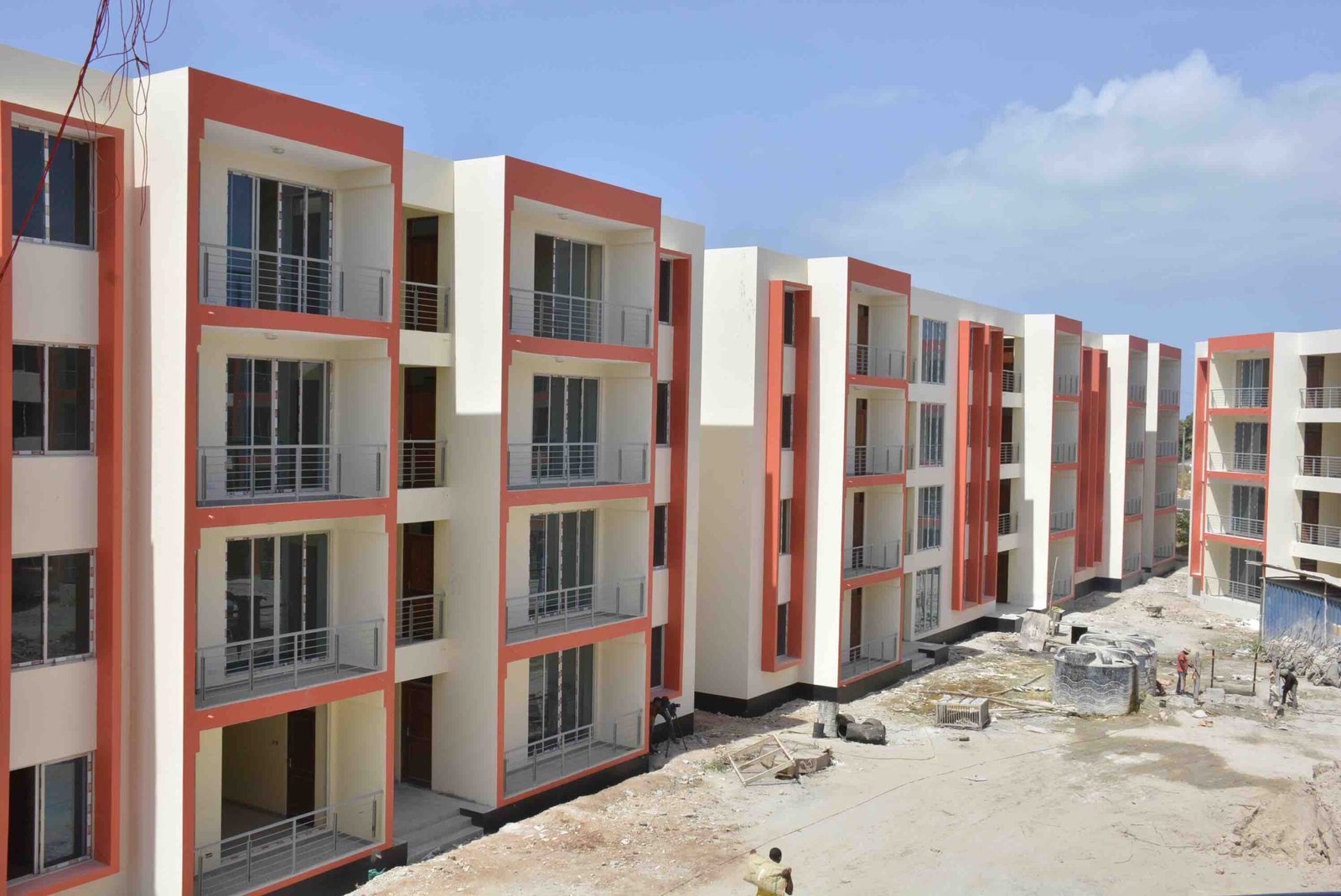
Fresh government data has cast doubt on job creation claims tied to the Affordable Housing Programme (AHP), contradicting figures repeatedly cited by President William Ruto and senior State officials.
According to the Kenya National Bureau of Statistics (KNBS) Economic Survey 2026, total employment in Kenya’s construction sector stood at 728,400 last year, up from 692,600 in 2024. This reflects an increase of 35,800 jobs, or 5.2 per cent growth, across both formal and informal segments.
The data challenges assertions that the AHP has generated hundreds of thousands of jobs since its launch in September 2022. KNBS attributed sector growth to a mix of public and private investments in housing, commercial developments and infrastructure, noting that “Growth in the sector was supported by sustained public and private investment in residential housing, commercial developments and infrastructure projects,” while listing the AHP among contributing factors.

President Ruto, however, has consistently presented the programme as a major employment engine. “The programme has created over 428,000 jobs, including architects, engineers, fundis, plumbers, electricians, carpenters, masons, steelworkers, transporters and thousands of MSMEs.At peak next year, it will employ up to one milLion Kenyans,” he told MPs during the State of the Nation address last November.
Government-linked reports present varying figures. A Budget Policy Statement by the National Treasury indicated that 214,057 housing units were under construction between 2022 and 2025. Meanwhile, a survey by audit firm Grant Thornton estimated that as of January 2026, total jobs linked to the AHP had reached 640,442, including 464,759 direct roles.
The survey, commissioned by the State Department for Housing, found that most direct employment came from housing projects themselves, while indirect jobs- particularly within Jua Kali artisans and small and medium-sized enterprises- accounted for a significant share. It also identified the Nairobi metropolitan region as having the highest concentration of workers.
Despite these claims, KNBS figures suggest a more modest trend. Since 2023, the entire construction sector- including roads and other infrastructure- has added about 77,000 jobs. Historical data shows employment rising from 651,400 in 2022 to 728,400 last year, with annual increases of 41,900 in 2023 and 35,800 in 2024.
KNBS further noted that the sector’s 6.8 per cent growth last year was largely driven by road construction and maintenance, alongside residential building activity. The survey also recorded 138,474 housing units under construction at an estimated cost of Sh385.8 billion.
Housing Principal Secretary Charles Hinga dismissed the KNBS interpretation, stating: “KNBS don’t know what they are doing. They were part of this report (the Grant Thorton survey). So, we read some malice from the team that compiled it.”
Mr Hinga maintained that the programme has created more than 600,000 jobs, arguing that estimates are based on conservative assumptions. “It is worth noting that to consistently create 120,000 jobs annually, the construction sector needs to be able to produce 60,000 housing units every year. This is a modest number, which can be easily fulfilled by the sector. Beyond the aggregate numbers, the AHP is deliberately structured to maximise inclusive employment, he added.
The conflicting figures now raise broader questions about how employment linked to flagship government programmes is measured, and whether official statistics align with political claims.
