

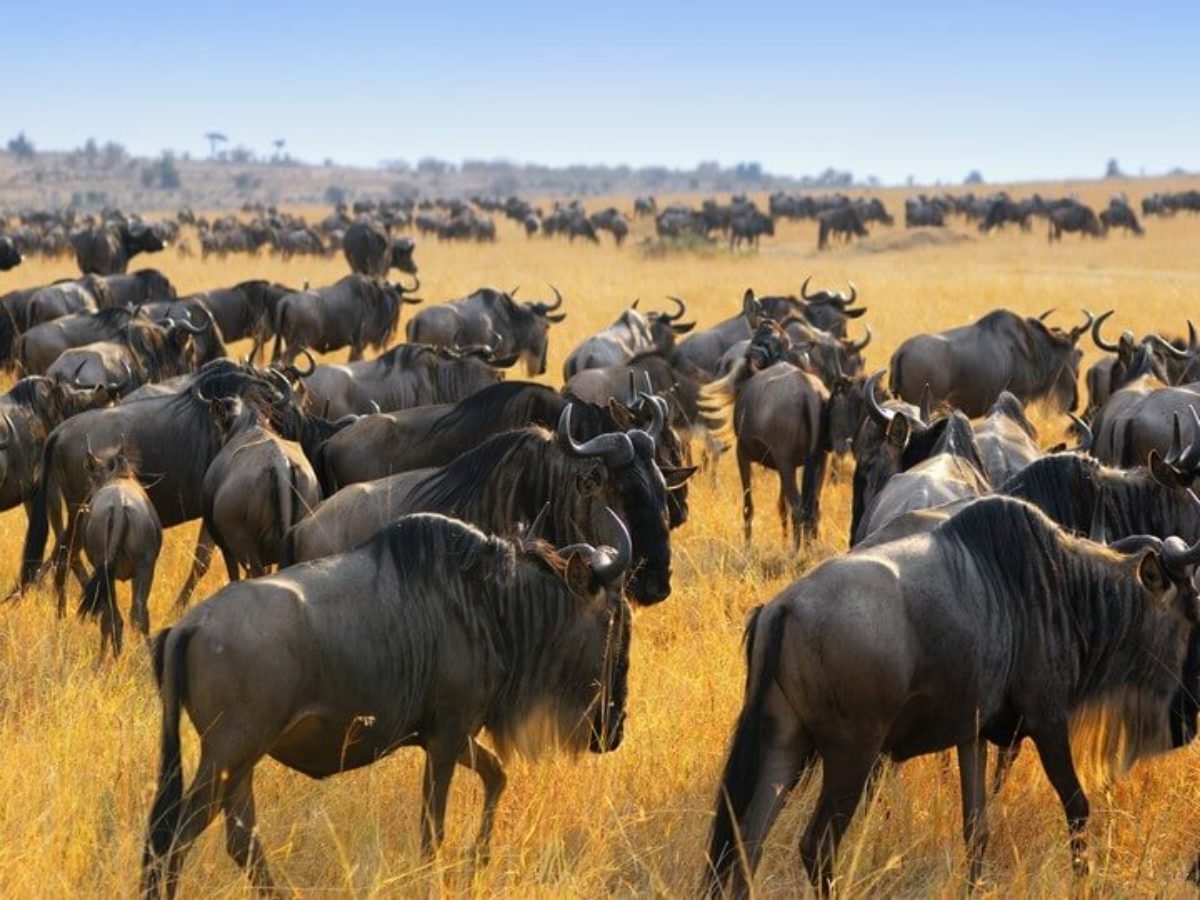
The first herds of wildebeest have arrived at the Maasai Mara National Reserve after crossing from Tanzania’s Serengeti National Park, signalling the start of the annual Great Migration that attracts visitors from around the world.
The movement of the animals began this week when thousands of wildebeest crossed the Sand River into the Mara. The migration is expected to continue over the coming weeks, bringing large numbers of tourists, photographers and safari enthusiasts to Narok County.
Tour guide Alex Ole Nkumum said the migration was already gaining momentum and that more animals were expected to arrive soon.

“We many more wildebeest to arrive throughout the week as the migration gathers momentum,” said Nkumum.
He added that the arrival of the herds was likely to benefit businesses that depend on tourism.
“We expect business to boom,” he said, noting that hotels, tour operators, restaurants and local traders usually record increased activity during the migration season.
The migration is considered one of the world’s most spectacular wildlife events. More than one million wildebeest, accompanied by zebras and gazelles, move between the Serengeti and the Maasai Mara each year in search of fresh grazing land and water.
- KWS to raise park entry fees to plug Sh12bn deficit
- KWS moves beyond e-Citizen with new KWSPay system
Wildlife experts say the arrival of the herds also changes the behaviour of predators in the reserve. Lions, leopards and crocodiles follow the migrating animals, creating dramatic scenes that attract wildlife photographers and documentary filmmakers.
During the months before the migration, many wildebeest remain in the Serengeti for the calving season. As the animals move north, they face dangerous river crossings and attacks from predators, making the journey one of nature’s greatest survival tests.
Reserve authorities have urged visitors and drivers to follow park rules during the busy season. Chief Park Warden Stephen Minis warned that strict measures would be taken against anyone who interferes with wildlife or drives outside designated areas.
“Drivers found driving off designated roads or harassing wildlife will face an on-the-spot fine of Sh20,000 and a one-year suspension of their vehicles’ access to the reserve,” said Minis.
He said officers had been deployed at major crossing points to enforce the regulations and ensure the safety of both visitors and animals.
Tourism stakeholders in Narok County are optimistic that the migration will increase visitor numbers and create economic opportunities for local communities. With more herds still making their way from the Serengeti, the Maasai Mara is once again preparing to host one of Africa’s most celebrated natural events.
– By Esther Keshe
