

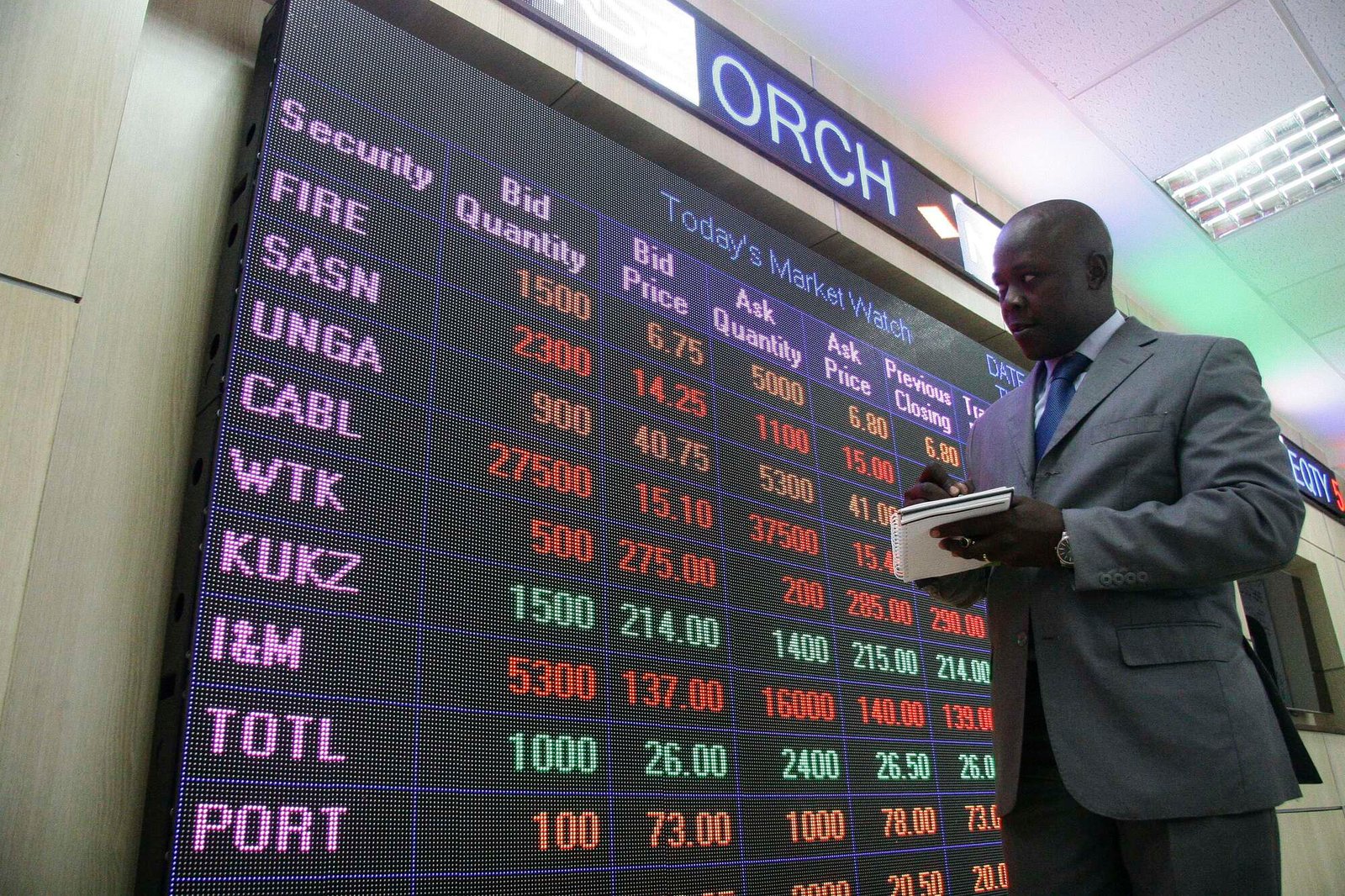
The Capital Markets Authority (CMA) is investigating HFCB Group over its release of financial results during trading hours last week, a move that breached capital markets disclosure rules and forced the Nairobi Securities Exchange (NSE) to halt trading in the company’s shares for the entire session.
CMA confirmed it is reviewing the matter jointly with the NSE and will take action “as appropriate,” leaving open the possibility of sanctions against the listed lender. “The Capital Markets Authority is reviewing the matter together with the NSE and will take action as appropriate,” the regulator said in an emailed response to Business Daily queries.
The trading halt was triggered after HFCB Group released its financial results to national newspapers on Thursday morning last week, while the NSE only circulated the company’s official performance statement to investors after 11am, well into the trading session.

The NSE confirmed the halt in a statement to investors;: “The Nairobi Securities Exchange Plc (NSE) wishes to notify investors and the public that it has halted trading in the shares of HFCB Group Plc for today’s trading session, following the release of the Company’s financial results during trading hours, contrary to Regulation 89(4) of the Capital Markets (Public Offers, Listings and Disclosures) Regulations, 2023.” The notice was issued shortly after 12.30pm on Thursday, with the halt taking effect under Rule 9.4.2(c) of the NSE Trading Rules for Equity Securities, with CMA’s approval.
At the centre of the breach is how the NSE manages price movement during major corporate announcements. Under normal trading conditions, the exchange enforces a strict daily price movement limit of 10 per cent from the previous day’s closing price.
That ceiling and floor are lifted specifically during sessions when material corporate announcements, such as financial results, are released, allowing open price discovery so investors can react freely to new information.
Because HFCB’s results reached the market without prior notice to the exchange, the 10 per cent cap remained in force even though material new information was already circulating, effectively denying investors the open price discovery the rules are designed to guarantee.
The NSE was left with no option but to halt trading for the rest of the day, with the price discovery window instead made available to shareholders on the following trading session.
Regulation 89(4) is explicit on timing;: material information of this kind must reach the regulator, the exchange and the public simultaneously, and specifically outside trading hours.
“The information required to be disclosed under these regulations shall be disclosed within 24 hours after the event simultaneously to the Authority [CMA], the securities exchange [NSE] at which the issuer’s securities are listed, if applicable, and to the public during non-trading hours of the relevant market segment,” the regulation states.
CMA said the requirement exists specifically to give investors adequate time to absorb and assess disclosures before the market opens, so that any resulting trading decisions are properly informed rather than made in the heat of a live session.
The results themselves showed a strong half-year performance. HFCB Group’s net profit for the first six months of 2026 rose 60 per cent to Sh998.3 million, while profit before tax climbed 74 per cent to Sh1.22 billion, up from Sh703 million over the same period last year.
Commenting on the results, HFCB Group Chief Executive Officer Robert Kibaara said: “These results reflect the disciplined execution of our strategy, with strong growth across both funded and non-funded income while maintaining a firm focus on efficiency. We are building a more diversified and resilient earnings base that positions our business for sustainable growth.”
Trading halts on the exchange are not unheard of. Days before the HFCB incident, the NSE also briefly suspended trading in Absa Bank Kenya shares on August 19, between 9.30am and 11am, though for an unrelated reason, to allow the orderly execution and settlement of a large block transaction, with CMA’s approval.
That earlier halt was a routine, planned market operation, in contrast to HFCB’s, which stemmed directly from a disclosure rule breach now under regulatory investigation.
