

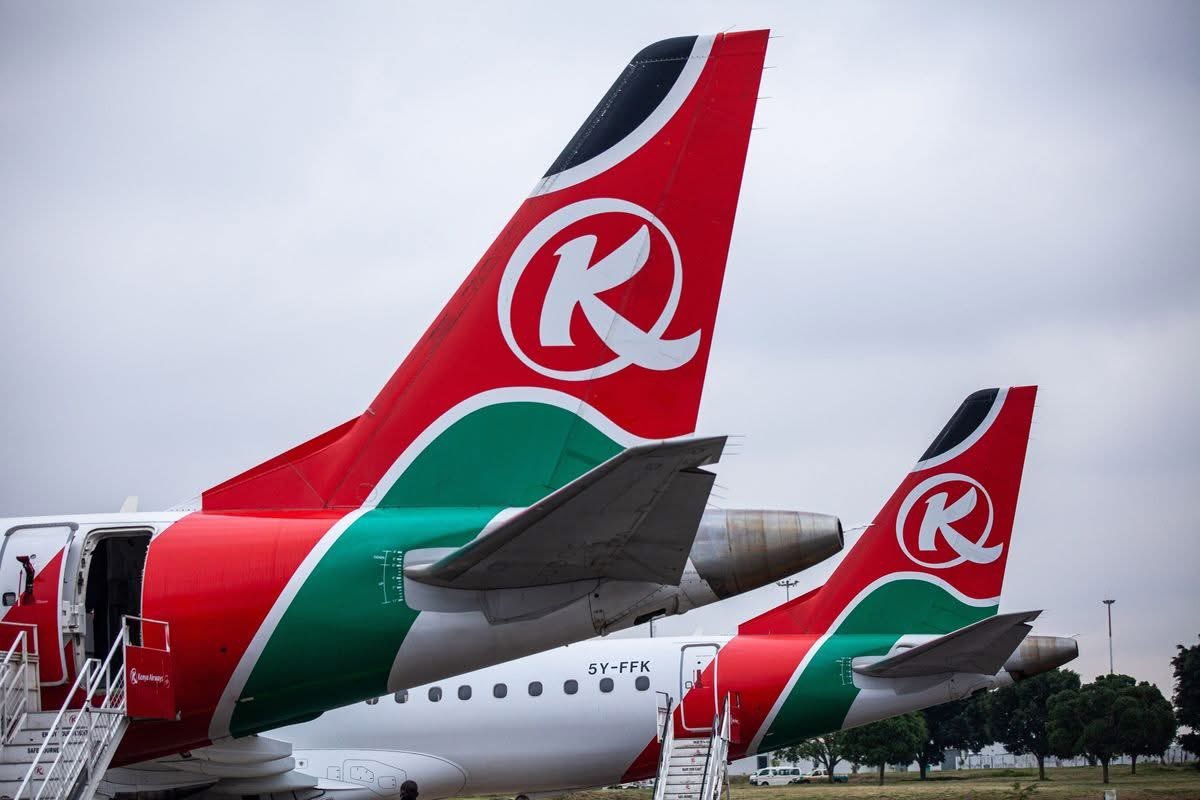
Kenya Airways says it is counting losses of over Sh900 million following the three-day aviation workers’ strike that crippled operations at Jomo Kenyatta International Airport (JKIA) and other major Kenyan airports between August 30 and September 2.
The airline’s management confirmed the scale of the financial hit even as it announced a full return to normal operations, with all backlogs from the disruption now cleared.
Beyond the direct cost to the airline itself, KQ acknowledged that passengers bore a significant share of the disruption’s real-world impact, facing altered travel schedules, additional expenses, and missed personal, business, and commercial engagements.

“While these figures demonstrate the scale of the operational and commercial impact on Kenya Airways, we recognise that the greatest impact was felt by our customers,” KQ Chairman Kiprono Kittony said.
Independent estimates of the financial damage broadly align with the airline’s own figures. Modelling based on KQ’s typical daily passenger volumes, average yields, and cargo contribution suggests the carrier’s revenue shortfall from the disruption came in at close to Sh905 million, even before accounting for additional costs such as rebooking, crew repositioning, and customer care.
That estimate has not yet been confirmed through fully audited figures, though it closely matches the airline’s own public assessment. In total, 63 flights were cancelled and more than 160 others delayed over the course of the disruption, with passengers at JKIA experiencing delays that in some cases stretched beyond six hours as the airline worked to reschedule and reroute affected services.
Kittony pointed to the disruption as a reminder of how tightly interconnected Kenya’s aviation industry actually is, noting that an airline’s ability to operate normally depends heavily on airports, ground handlers, regulators, air traffic services, and a wide network of other service providers working in sync.
The strike itself was resolved through a return-to-work formula signed on September 2 by Trade Cabinet Secretary Alfred Mutua, Central Organisation of Trade Unions (COTU) Secretary-General Francis Atwoli, the Kenya Aviation Workers’ Union (KAWU), and the Kenya Civil Aviation Authority (KCAA).
With operations now fully restored, Kenya Airways said its attention has shifted to strengthening coordination and resilience across the aviation system going forward.
“With our operations now fully restored, our focus is firmly on the future; serving our customers, reconnecting people and businesses, and moving passengers and cargo safely and reliably across our network,” the airline said.
Customers have been advised to check their flight status directly through the Kenya Airways website and to keep their contact details updated via the Manage Booking option or the KQ Mobile App, with the airline’s Customer Excellence Centre remaining available around the clock to assist affected travellers.
In September 2024, KQ also reported losing at least Sh80 million in a single day during protests linked to the Adani Group’s proposed lease deal for JKIA, with then Chief Executive Officer Allan Kilavuka citing the combined cost of lost time, rebooking fees, and passenger compensation.
The airline reported even steeper daily losses, of up to $2.4 million, during a four-day pilots’ strike in 2022, which was blamed for contributing to that year’s wider financial downturn at the carrier.
