

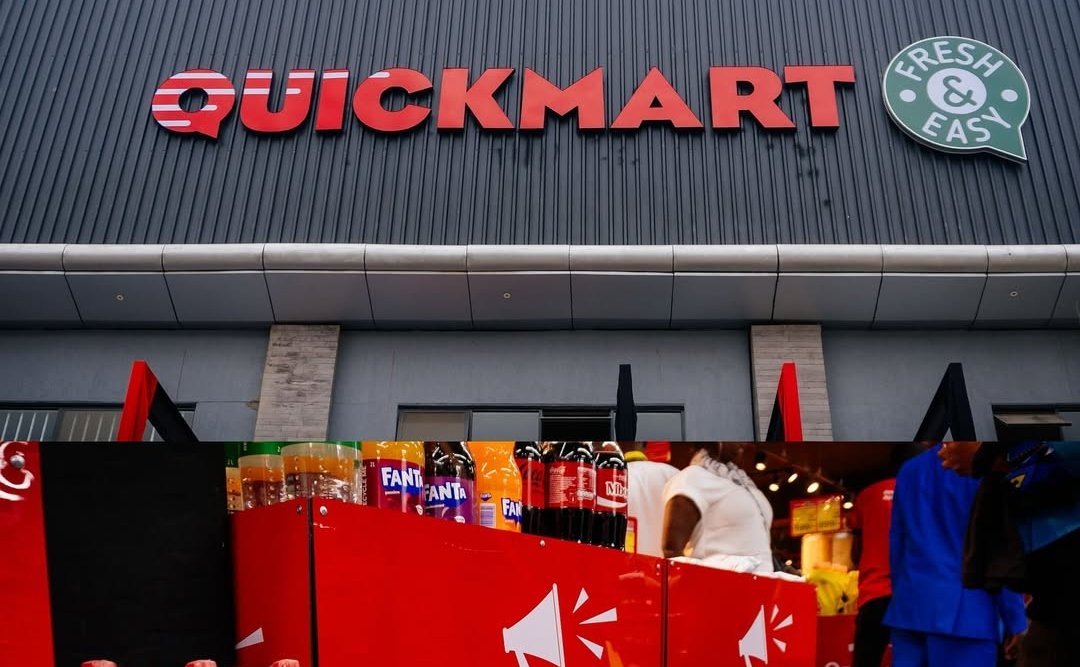
Supermarket chain Quickmart is set to list on the Nairobi Securities Exchange (NSE), with its sole shareholder offering up to a 57.5 per cent stake in a multi-billion-shilling deal that will give private equity firm Adenia Partners and the retailer’s founders a partial exit.
Quickmart announced the proposed listing on Wednesday, September 24, saying it would trade on the Main Investment Market Segment of the NSE. Its sole shareholder, Sokoni Retail Kenya Limited (SRKL), plans to sell two billion existing ordinary shares, each with a nominal value of Sh0.20, representing 50 per cent of the company’s issued share capital.
An over-allotment option could raise the total stake sold to 57.5 per cent if demand is strong. If the option is not exercised, SRKL will retain about 50 per cent of Quickmart, while full exercise would reduce its holding to approximately 42.5 per cent.
The transaction is structured as an offer for sale, meaning Quickmart will not issue new shares or receive proceeds from the sale. The money will instead go to the existing shareholders through SRKL. The offer remains subject to regulatory approval and is expected to launch on or around September 30, 2026.
Group Chief Executive Officer Peter Kang’iri described the listing as an important step in the retailer’s growth.
“Over the past two decades, we have built one of Kenya’s leading modern grocery retailers, serving millions of customers across 16 counties,” he said.
“Listing on the NSE will give Kenyans the opportunity to own a share of a business they already shop in, while raising our profile with suppliers and partners as we continue to deliver on our growth strategy.”
Adenia Partners Partner Martha Osier said the existing shareholders would retain a substantial interest in the business after the offer. “The existing shareholder group intends to retain a substantial interest in the company following the offer, reflecting our continued confidence in the Company and its long-term prospects,” she said.
SRKL is owned by Adenia alongside the founders of Quickmart and Tumaini Supermarket, with all four core shareholders expected to sell part of their holdings. Adenia is expected to remain the anchor shareholder following the transaction. Quickmart was founded in Nakuru in 2006, while Adenia invested in the retail businesses that were subsequently combined to form the current chain.
Quickmart has grown to 72 stores across 16 counties, recording about five million customer transactions a month and having approximately 2.5 million members in its Q-Points loyalty programme.
The retailer estimates that it has about 15 per cent of Kenya’s modern grocery retail market and is the country’s second-largest modern grocery retailer by store count and turnover.
It is targeting more than 100 stores over the medium term, with plans to open between 10 and 15 outlets annually.
The company’s financial performance has also expanded alongside its store network. Revenue increased from Sh25.68 billion in 2021 to Sh50.43 billion in 2025, representing a compound annual growth rate of 18.4 per cent.
Reported profit after tax rose to Sh1.51 billion in 2025, while adjusted profit after tax stood at about Sh1.7 billion. In the first half of 2026, Quickmart generated Sh27.27 billion in revenue and Sh872.8 million in reported profit after tax.
Following the listing, Quickmart’s board intends to target a dividend payout of at least 80 per cent of annual profit after tax, paid semi-annually. The policy will remain subject to the company’s financial performance, capital requirements and the board’s discretion. The company expects its first dividend relating to the second half of 2026 to be paid in the first half of 2027.
The NSE listing also provides a potential exit route for Adenia, which has invested in Kenya’s retail sector for several years. Adenia will remain an anchor shareholder. Private equity firms have traditionally favoured selling stakes to other investors or strategic buyers rather than using public markets, with liquidity concerns and the cost and complexity of listings often cited as factors behind the limited number of such exits.
The 2024 Deloitte Africa Private Equity Confidence Survey found that 56 per cent of private equity firms preferred secondary sales to other private equity investors, while 32 per cent favoured strategic buyers or partial exits. Quickmart’s planned listing therefore represents a relatively uncommon route for a private-equity-backed company to broaden ownership through the public market.
The planned offer also adds to recent activity at the NSE after a prolonged period of limited new listings. Kenya Pipeline Company, Family Bank and Shri Kishana Overseas Limited have joined the market over the past year, providing investors with additional listed counters.
Quickmart would bring another major consumer-facing business to the exchange and broaden the range of companies available to public investors.
Adenia’s investment in the Kenyan retail sector came as the industry was undergoing significant changes following the collapse or decline of major supermarket chains including Nakumatt, Uchumi and Tuskys, while international retailers such as Shoprite and Game also exited the Kenyan market.
Quickmart subsequently expanded its footprint, growing from 25 stores when Adenia became involved to 72 outlets across 16 counties.
The retailer’s growth strategy included professionalising management and strengthening relationships with suppliers as it expanded. Peter Kang’iri was appointed chief executive, while the Kinuthia family retained representation on the company’s board. The expansion has since placed Quickmart among Kenya’s largest supermarket chains, behind Naivas and ahead of other major retailers by store count.
The proposed offer will be conducted through the sale of existing shares, with the final offer price, allocation details, risk disclosures and timetable expected to be provided in the Information Memorandum. The price will determine the implied valuation of Quickmart and the value ultimately realised by the selling shareholders.
