

Kenya and Germany have agreed to make it easier for Kenyans to obtain visas and jobs in Germany. The two countries will streamline visa and recruitment procedures and accelerate the recognition of professional qualifications.
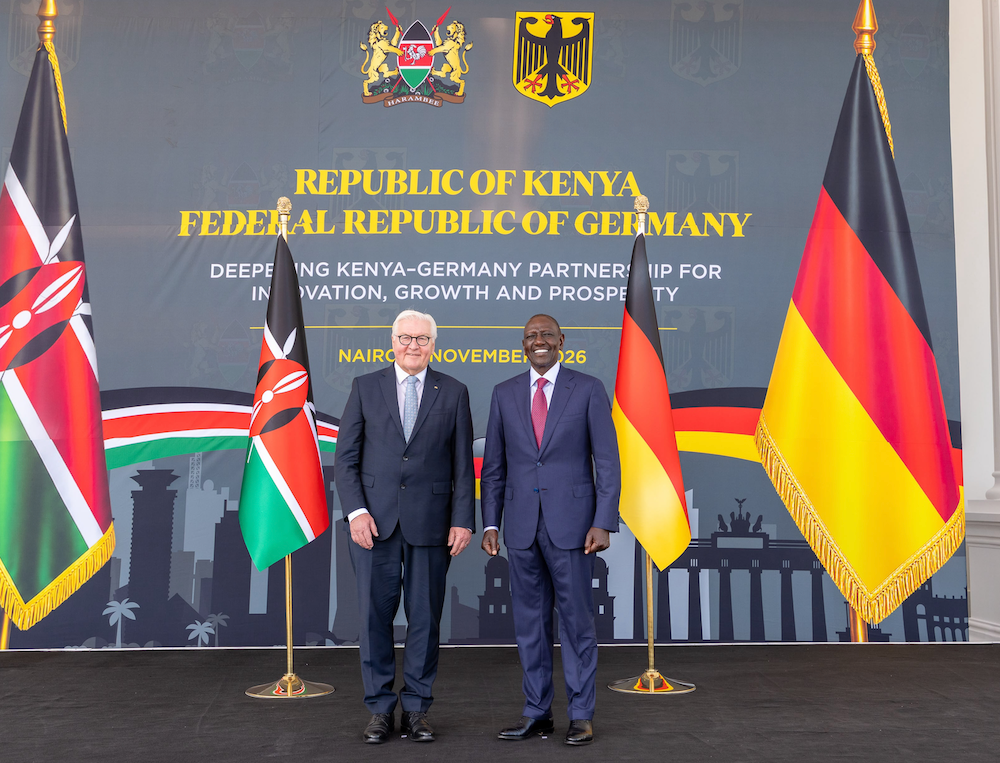
President William Ruto and German Federal President Frank-Walter Steinmeier reached the agreement during talks at State House, Nairobi, on Wednesday, November 25, 2026. The two leaders also witnessed the signing of a memorandum of understanding between Kenya and telc, a German language examination and certification body.
The deal will allow Kenyans to sit internationally recognised German language examinations locally. German language skills are a key requirement for employment in Germany. The agreement also covers German textbooks, vocational training materials, curriculum development and teacher training.

Ruto said the labour partnership between the two countries was already yielding results. Under the Comprehensive Migration and Mobility Partnership Agreement, signed in September 2024, the number of Kenyans working in Germany rose from 7,170 in March 2024 to 9,500 in March 2026. The number of Kenyan trainees contributing to Germany’s social security system increased from 820 to 1,260 over the same period.
“We are encouraged by the progress of our overseas employment partnership,” Ruto said.
Steinmeier said Germany wanted labour migration to be well managed.
“We want to offer young people opportunities and want to have orderly pathways of labour migration,” he said.
The leaders also discussed closer links between Kenya’s technical and vocational training (TVET) institutions and German industry. They explored opportunities for Kenyan seafarers through structured training, sea-time placements and partnerships with German shipping firms.
Germany faces a growing shortage of workers. It has more than 600,000 vacant skilled jobs, with nursing, IT, engineering and construction among the sectors most affected. Economists estimate that the country needs about 400,000 foreign workers a year. Researchers say 2026 is the first year in which more people are leaving Germany’s workforce than joining it.
On trade and investment, Ruto proposed the establishment of a Kenya-Germany Business Forum. He invited German investors to explore opportunities in manufacturing, agro-processing, infrastructure, healthcare, renewable energy, pharmaceuticals, agriculture, services and digital technology.
“As Africa moves from loans to investments, we are keen to unlock the continent’s vast economic potential,” he said.
Germany has committed £52.5 million (about Sh7.8 billion) in development cooperation funding to Kenya for 2026 to 2028, following government talks in Berlin in June. More than 120 German companies operate in Kenya.
Steinmeier, who arrived in Nairobi on Tuesday night, is on a five-day African tour that has also taken him to Côte d’Ivoire and Ghana. On Thursday, November 26, he is scheduled to visit Crescent Island in Naivasha before returning to Germany.
