

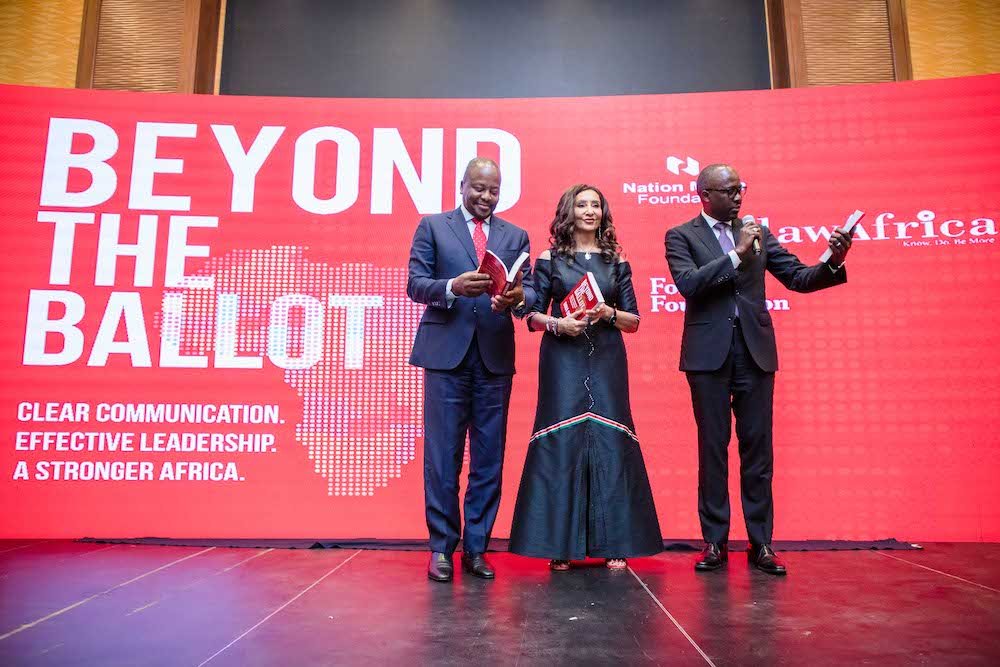
In a milestone move, strategic communications guru Gina Din Kariuki launched on how Africa can reclaim her story signaling a new chapter in the continent’s leadership debate.
The book, titled “Beyond the Ballot” comes at a time when public trust is fragile, democratic institutions are under strain, and Africa’s global voice is being renegotiated.
“Telling our story is not optional,” Gina said during the book launch event on the evening of Thursday, February 20. “It is strategic, necessary and overdue to be able to tell African story by Africans.”

Din’s concern, as per her Beyond the Ballot book, reflects a wider discussion as data from Africa No Filter shows that media coverage of Africa, both globally and within the continent, is widely dominated by negative narratives, focusing heavily on poverty, conflict, and corruption.
Her thesis also seems to be bordered on enabling citizens trust as it urges people to challenge leaders to move beyond electoral victory toward the harder work of delivery, credibility, and sustained public trust. It argues that in a digitally connected world, leadership is no longer defined solely by policy, but by clarity of communication, institutional strength, and narrative control.
“Too many (political) parties on this continent function like election startups. They appear just in time for campaign season, disappear after defeat, and remain absent until the next cycle… Democracy requires constant pressure, not periodic performances. When parties exist only when there’s power to grab, they reveal their purpose. They were never about service. They were never about vision,” she writes on page 72 under the “Built to Last, Not just to Win” chapter.
Principal Secretary for Foreign Affairs, Dr. Korir Sing’oei, who served as guest of honour, emphasized the need for Africa to communicate her story, viewpoints and positions deliberately and consistently across multiple arenas.
Dr. Sing’oei says that, “Africa’s leaders must climb down and engage its citizens and earn the trust necessary in fostering an environment where collaboration and shared development can be made possible.”
In terms of the trends, narratives touching on Africa generally limit investment and mostly spread outdated, often “dark” depictions of the continent. But in Beyond the Ballot book, Din lays out tools and strategies which, if embraced, can transform the discordant voices of government and policy actors into coherent and persuasive showcases transmitting hope and certainty in times of drift and challenge.
Beyond The Ballot has also received endorsement from iconic Ivorian footballer Didier Drogba, whose leadership beyond sport reflects the growing influence of African voices across culture, diplomacy, and global citizenship.
The book’s relevance not only to governance, but to diplomacy and Africa’s positioning on the world stage.
“Through real-life case studies and practical insights, it aims to inspire leaders, citizens, and the next generation of African changemakers to lead with intention, courage, and vision,” says Din.
Drawing on lived experience, policy insight, and cross sector expertise, Beyond the Ballot presents practical case studies from governance, media, crisis management, public health, diplomacy, and nation branding. It connects communication to accountability and demonstrates how trust, once lost, must be rebuilt deliberately.
