

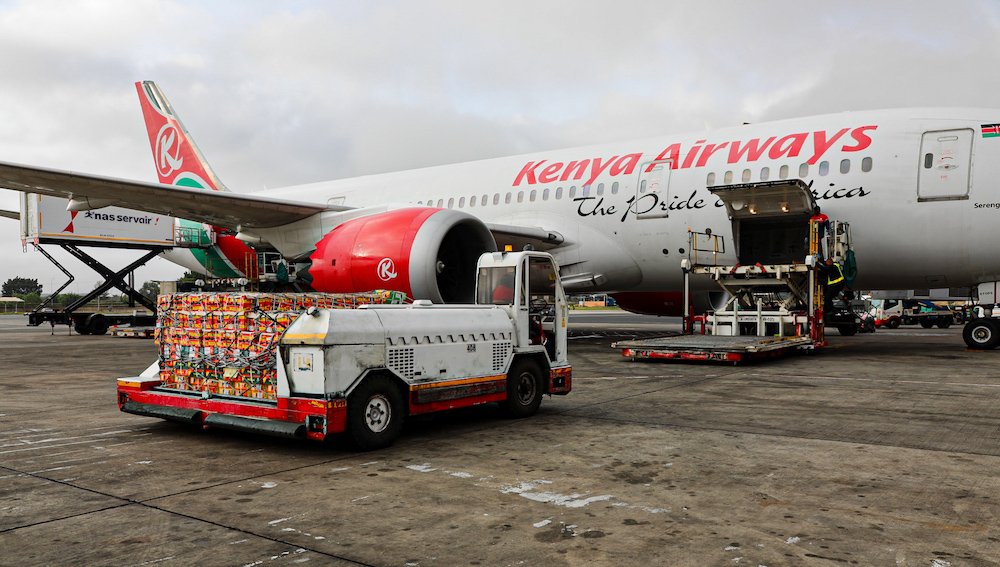
The horticulture export sector has recorded robust growth in the first quarter of the 2025/2026 financial year. According to data from the Agriculture and Food Authority (AFA), between July and September 2025, the sector saw a 3.5% rise in export volume and a 6.2% surge in export value compared to the same period last year.
This translated into total revenues of Sh34.41 billion, an increase from Sh32.38 billion the previous year, highlighting a strengthened capacity for generating foreign exchange. Kenya exported 108,584 metric tonnes, up from 104,951 metric tonnes, while the financial value grew by Sh2.02 billion.
The notable divergence between volume and value growth points to an encouraging rise in the average unit price of exports, likely driven by a favorable mix of high-value products or stronger international prices for key commodities such as flowers, fruits, and vegetables.

The Netherlands remains the preeminent destination, commanding 35.13% of total earnings with exports valued at Sh10.99 billion. This single market far outpaces the second-largest destination, the United Kingdom, which accounted for Sh4.47 billion.
Together with Germany (Sh1.99 billion) and France (Sh2.46 billion), these four European nations collectively absorb nearly two-thirds of Kenya’s horticulture export value, illustrating a significant geographic concentration in traditional markets.
A secondary tier of markets is also gaining importance. The United Arab Emirates (UAE) stands out as the most significant partner in this group, with exports worth Sh2.52 billion, followed by Spain (Sh1.31 billion), Saudi Arabia (Sh1.25 billion), and Kazakhstan (Sh1.08 billion).
This tier reflects a successful and strategic foray into the markets of the Middle East and Central Asia, even though their individual contributions remain below those of the top European buyers.
Additionally, countries including Italy, Mexico, the United States, and Australia each contribute between 1% and 3% of the total value. While individually modest, these markets are crucial components of a diversified export strategy, mitigating over-reliance on any single region and spreading risk.
Across all these markets, a total of 94,929 metric tonnes of goods valued at Sh31.31 billion were exported, demonstrating the global reach of the horticulture sector.
Within Africa, South Africa leads as the primary destination, though it holds a mere 1.01% share of total exports, indicating potential for deeper intra-African trade. Overall, this represents a strong start to the first quarter of the financial year, as the results demonstrate a sector that is successfully commanding better returns in the global marketplace.
While the enduring and concentrated reliance on European partners continues, emerging footprints in the Middle East and Central Asia offer promising avenues for future diversification.
However, with minimal trade within Africa, there is a pressing need to actively grow intra-African trade. Strategically cultivating markets closer to home can build a more resilient and balanced export strategy, reducing over-reliance on any single region and unlocking the vast potential of Africa.
