

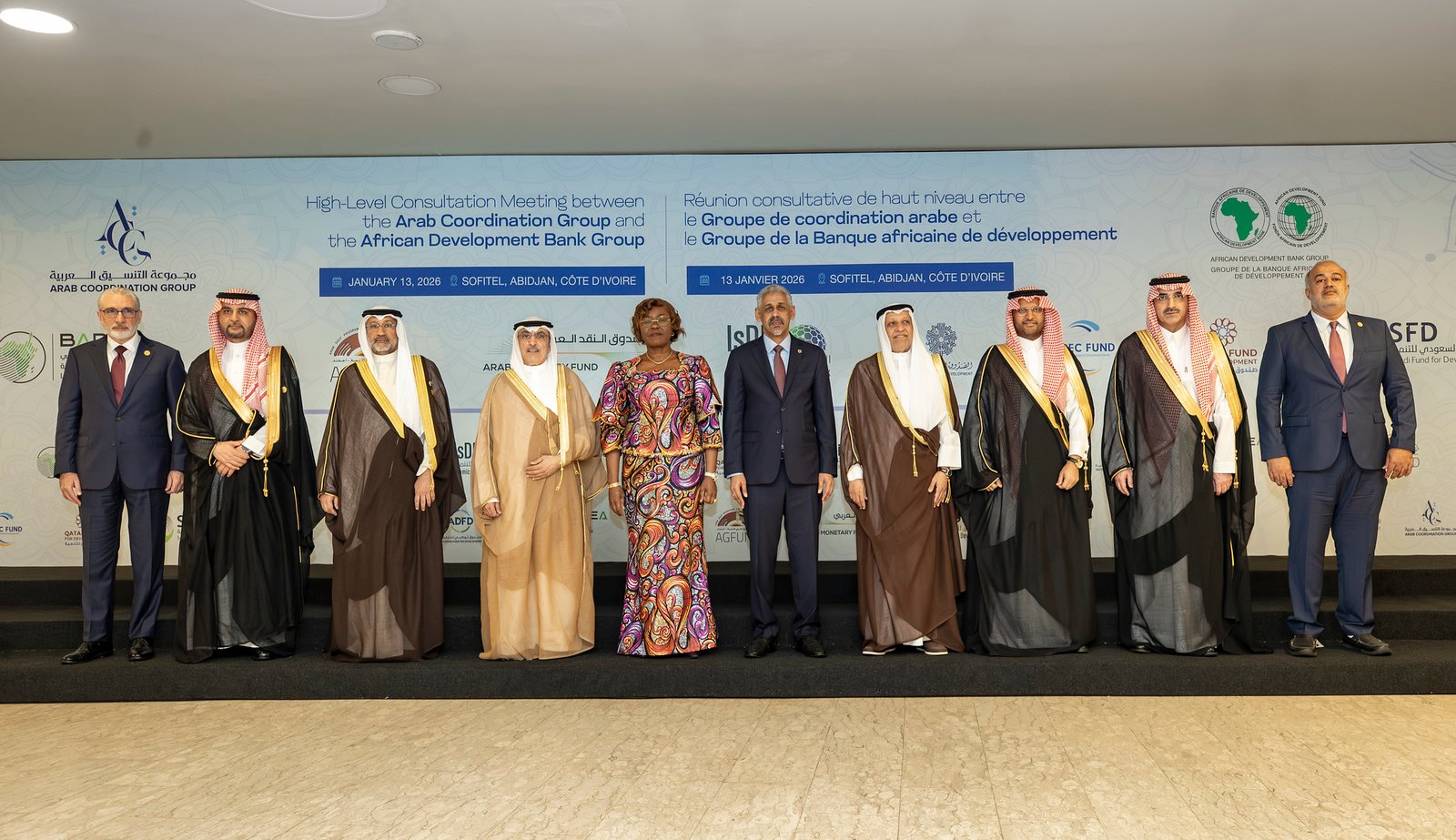
The African Development Bank Group (AfDB) and the Arab Coordination Group (ACG) have entered into a strategic partnership designed to reshape Africa’s economic future through large-scale investments.
This marks a shift from fragmented, project-by-project cooperation toward a more programmatic and coordinated co-investment model aimed at addressing the continent’s development challenges.
Africa faces a widening financing gap, with urgent needs in energy access, climate resilience, food security, and private-sector growth. The partnership seeks to bridge this gap by mobilizing resources in a more coordinated and catalytic manner.

The two institutions will combine their financial strength, long-term financing capacity, sector expertise, and regional networks to anchor a new wave of Arab-African investment. The goal is to mobilize larger pools of public and private capital and create a sustained pipeline of transformative projects.
This collaboration aligns with AfDB’s New African Financial Architecture, which aims to strengthen financial sovereignty by integrating development finance institutions, insurers, capital markets, and private investors into a resilient ecosystem. The ACG partnership, involving ten major Arab development funds and banks, is a cornerstone of this vision.
A landmark joint declaration was adopted to guide the renewed partnership, outlining priority areas, principles for follow-up, and a roadmap toward a Financing and Operational Partnership Framework by 2026. The declaration also emphasizes the role of the African Development Fund in supporting vulnerable countries.
Middle East–Africa investment ties have grown significantly since 2025, with GCC investments surpassing Sh23.09 trillion ($179 billion). Major deals include UAE-Kenya trade agreements, logistics expansion in Angola, and Saudi Arabia’s Sh5.29 trillion ($41 billion) investment pledge. Additional momentum comes from investments in digital infrastructure, AI, humanitarian aid, and fintech partnerships across the continent.
While challenges around governance, equity, and capacity building remain, the trajectory points to the Middle East emerging as a key economic partner for Africa, offering an opportunity to reduce reliance on traditional Western and Eastern partners.
