

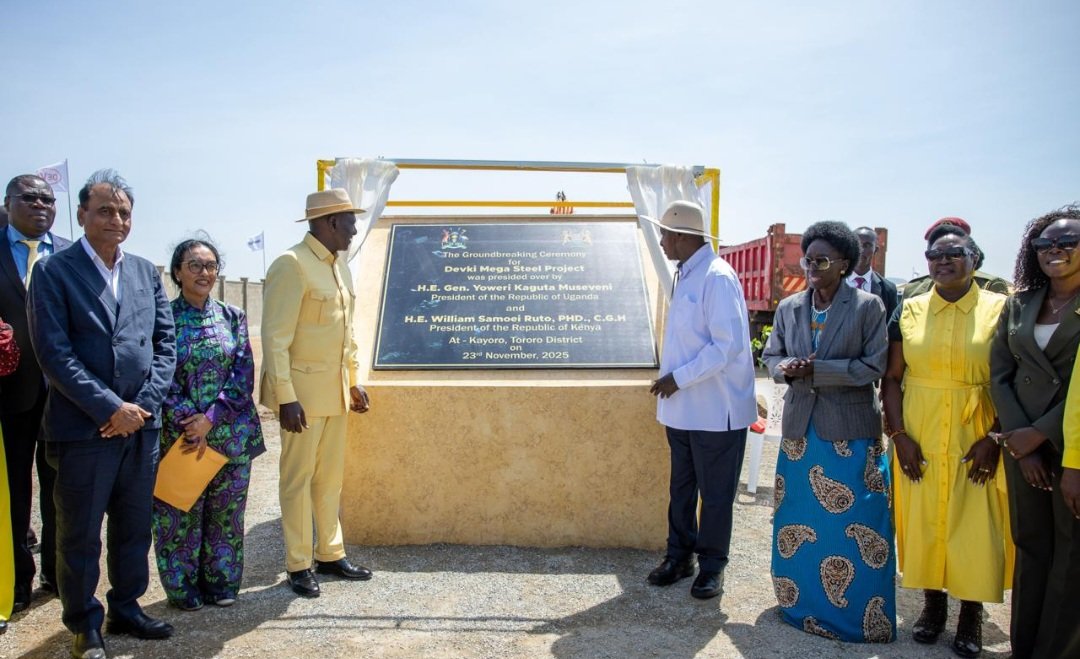
When Kenya-based steel miller Devki Group broke ground in Tororo, Uganda, on November 23, it signalled that demand for steel products is already substantial across East Africa.
The USD 500 million mega project (Sh65 billion), scheduled for completion by the end of 2027, will raise Devki’s total regional investment to USD 1.1 billion.
Billionaire industrialist Narendra Raval, the founder and chairman of Devki Group, is tightening his grip on the lucrative steel business, saying the new plant will help Uganda reduce its trade deficit.
“This project will reduce the trade deficit of Uganda by over a billion dollar by not importing the steel that is currently imported and also the exportation of over $4 billion per annum of unprocessed steel from Uganda to the neighbouring countries,” Mr Raval said.
President William Ruto and his counterpart Yoweri Museveni attended the official launch of the multi-billion project. Dr Ruto expressed optimism that the project would lift the regional economy.
“Our countries are well positioned to play in the regional and global steel market,” Ruto said. “Africa’s steel market reached 39 million tonnes in 2024 and is projected to reach a demand of 52 million tonnes by 2034 driven by bolstering infrastructure and advancing industrialization.”
Dr Ruto added that the project will help cut import bills, create jobs, build new value chains, and expand opportunities while accelerating intra-African trade.
President Museveni said Uganda loses at least USD 500 million annually on steel product imports, while Kenya spends USD 800 million and the entire East African region spends USD 5 billion on steel products.
In Kenya, Devki operates from multiple locations including Ruiru, Athi River and Mombasa, supplying a wide range of steel products to the market. Besides steel, Mr Raval has built his fortune through ventures in cement, barbed wire and construction bars.
According to industry associations, steel demand in Africa is rising, and the continent is experiencing steady growth in steel production, contrasting with declines in regions such as Asia, the EU and Russia.
