

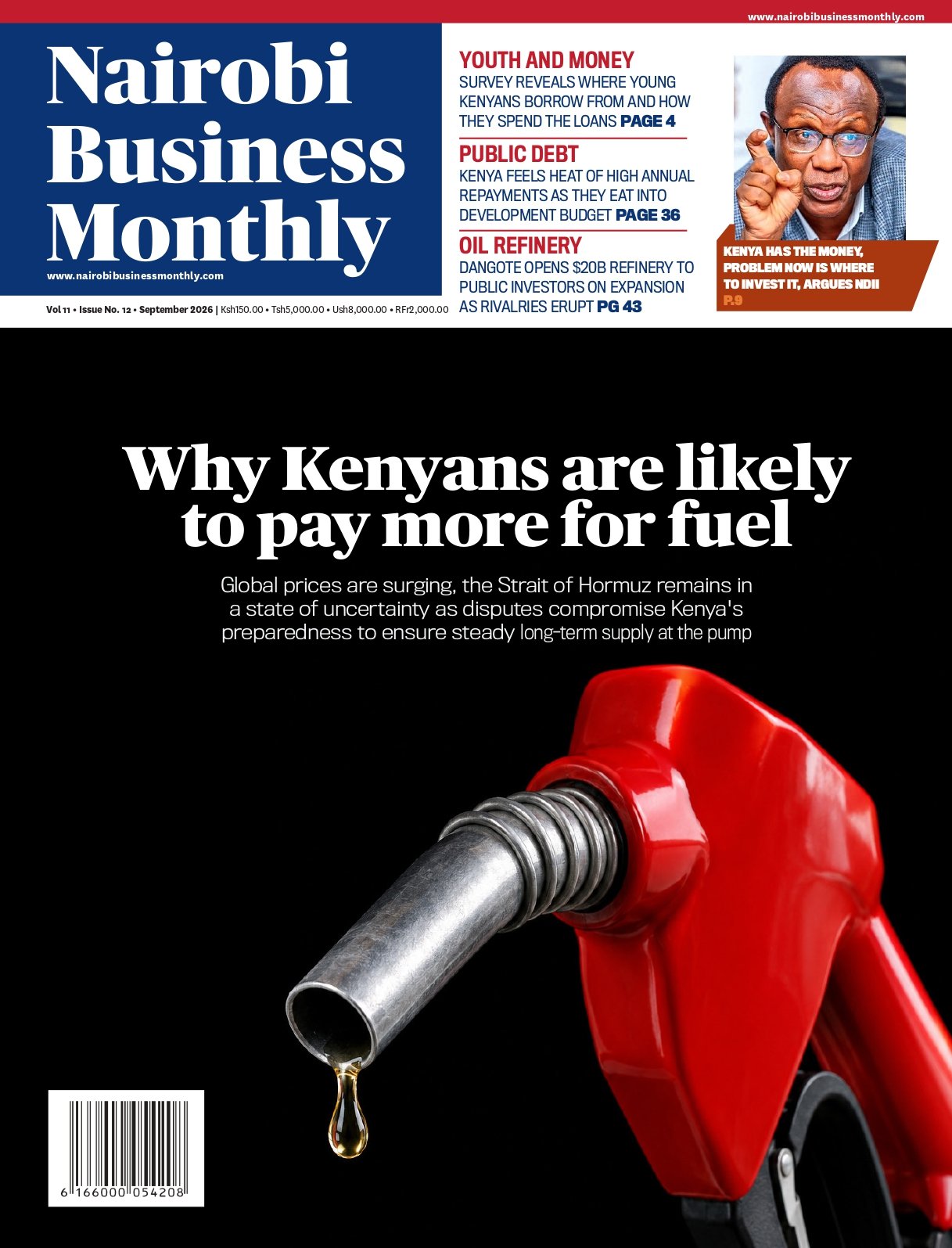
Kenyan investors will soon be able to participate in Dangote Petroleum Refinery’s ongoing initial public offering (IPO) for as little as Sh490 through a new Nairobi Securities Exchange (NSE)-listed investment vehicle awaiting regulatory approval.
The investment will be structured through global depository receipts (GDRs), which will give local investors exposure to Dangote Petroleum Refinery and Petrochemicals Freezone Enterprise without having to trade directly on Nigeria’s stock market or open offshore brokerage accounts.
Each GDR will represent underlying Dangote refinery shares and will be priced at about Sh49 per share. Renaissance Capital Kenya will sponsor and issue the receipts, while Stanbic Bank will act as custodian for the underlying shares.
Stanbic will purchase the Dangote shares in Nigeria before they are packaged into GDRs for trading by Kenyan investors on the NSE. The receipts will be bought and sold in Kenya through licensed local stockbrokers.
The arrangement is expected to make it easier for ordinary Kenyan investors to participate in what has been described as Africa’s largest IPO, after access to the Nigerian offer proved difficult for investors without established links to the country’s brokerage market.
At present, Kenyans seeking to buy Dangote shares must use local stockbrokers that have partnerships with Nigerian brokerages. The arrangement also requires a substantially higher minimum investment of about Sh259,520, equivalent to $2,000.
Renaissance Capital expects regulatory approval from the Capital Markets Authority (CMA) and the NSE in early October, with the Kenyan offer targeted to run from October 5 to October 13, in line with the closing of the IPO in Nigeria.
The GDRs are expected to begin trading on the NSE on December 8, giving Kenyan investors a local platform through which to buy and sell exposure to Dangote refinery shares. Renaissance Capital says the Kenyan offer will follow the Nigerian IPO structure, where investors can subscribe for a minimum of 10 shares for just under Sh500.
“We would like everybody to participate in the IPO, which means using the issued information memorandum which allows for the purchase of a minimum of 10 shares,” said Stanley Kariuki, chief executive officer of Renaissance Capital Kenya. “We have seen interest across the board from both retail and institutional investors.”
The GDRs will track the performance of the underlying Dangote shares traded on the Nigerian Exchange Group (NGX), meaning movements in the price of the NSE-listed receipts will reflect changes in the value of the shares held in Nigeria.
Dividends generated by the underlying shares will also be collected by the sponsoring broker and custodian before being passed on to GDR holders, in a structure similar to the distribution of gains to investors in unit trust schemes.
However, investors using the GDR structure could incur higher administrative costs than those buying shares directly on the NSE. They may also face liquidity risks if the number of buyers and sellers in the market does not match.
Once the CMA and NSE approve the transaction, Dangote will place the shares with the Nigerian custodian bank, Stanbic Bank. The Nigerian bank will then confirm the shareholding with its Kenyan counterpart, which will issue the corresponding GDRs.
The depository receipts will be traded and settled in Kenyan shillings through the Central Depository and Settlement System (CDSC), the same system used for other shares listed on the NSE. Investors will therefore be able to transact in the receipts through licensed Kenyan brokers.
Renaissance Capital has opted for GDRs as the mechanism for bringing the Dangote offer to Kenyan investors because a direct cross-listing of the refinery on the NSE is not currently planned. “With GDRs, you get transparency on costs, pricing and trading.
Our main aim is to make sure that before and after the IPO, investors will be able to have visibility. The second factor informing our choice for the depository receipts is that all people can participate in the offer, irrespective of the investment class,” added Mr Kariuki.
Dangote has indicated that a direct cross-listing on the Nairobi bourse could follow at a later stage, potentially giving Kenyan investors access to the company’s shares themselves rather than through depository receipts.
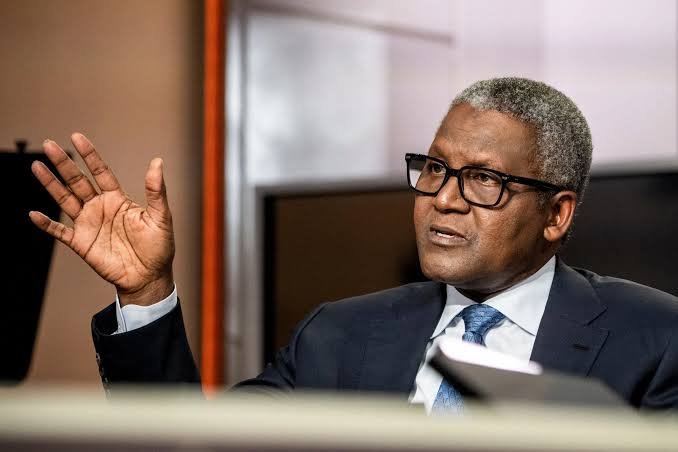
The company’s founder and Africa’s richest man, Aliko Dangote, also says he is considering a local listing for the planned Lamu East African refinery, whose groundbreaking is scheduled for today. “Our job is to deepen African capital markets, whatever it takes to have this shared prosperity. Cross-listing and secondary listing is something we will look at doing as we go along,” Mr Dangote said.
A cross-listing would differ from the GDR arrangement because the refinery’s actual shares would be listed directly on the NSE, rather than investors holding receipts representing shares deposited with a custodian.
Dangote is offering 4.1 billion shares, equivalent to a three per cent stake in the Lagos-based Dangote Petroleum Refinery and Petrochemicals Freezone Enterprise, at Sh49.25 each, or about 38 US cents and 525 naira.
The IPO is expected to raise about Sh202 billion, with the proceeds earmarked for expanding the Lagos refinery. Dangote plans to double the facility’s processing capacity from its current 700,000 barrels per day to 1.4 million barrels per day.
Interest among Kenyan investors has grown partly because of Dangote’s plans to establish another major refinery in Lamu, linking the Nigerian billionaire’s capital-markets activities with his wider expansion plans in Kenya.
Dangote has promoted the Nigerian share sale as a “people’s IPO”, positioning it as an opportunity for ordinary Nigerians to participate in the growth of the refinery.
Demand for products from the Lagos refinery has also increased amid supply disruptions associated with the Iran war, enabling the facility to sell jet fuel to markets in Western Europe.
