

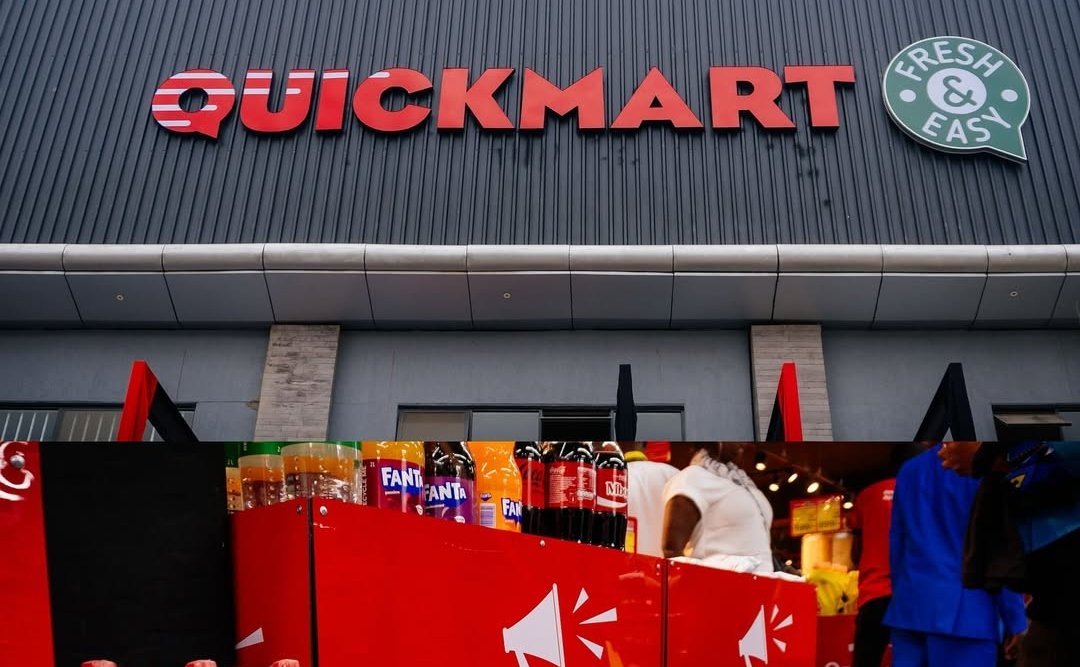
The International Finance Corporation (IFC), the World Bank’s private investment arm, is set to acquire a 6.5 per cent stake in Quickmart through the retailer’s initial public offering (IPO), committing Sh1.94 billion ($15 million) to the supermarket chain. The investment marks the IFC’s return to Kenya’s retail sector four years after it exited a minority investment in Naivas after recording a substantial gain.
Quickmart has named the IFC as a cornerstone investor in its Sh15 billion IPO, which places the supermarket’s total valuation at Sh30 billion. The IFC will acquire 258.67 million Quickmart shares, representing about 13 per cent of the shares being offered to investors and translating into a 6.5 per cent holding in the retailer.
The investment underscores the IFC’s continued interest in Kenya’s consumer and capital markets, while giving Quickmart an influential institutional shareholder as it enters its next phase of growth.
The IFC has previously made a significant return from Kenya’s supermarket sector. Between 2020 and 2022, it was part of a consortium that acquired and subsequently sold a 31.5 per cent stake in Naivas. Its latest investment in Quickmart is similarly aimed at benefiting from the retailer’s expansion programme and dividend policy.
Quickmart distributed Sh1.65 billion to shareholders in dividends, equivalent to a payout ratio of 109 per cent. The supermarket intends to maintain shareholder distributions at a minimum of 80 per cent of its earnings in the coming years. The IFC’s Quickmart investment comes alongside another major commitment to an African capital markets transaction.
The institution is investing $90 million, equivalent to about Sh11.7 billion, in the ongoing Airtel Money IPO on the London Stock Exchange (LSE), which is targeting Sh90.5 billion. Airtel Money is the fintech business of Airtel Africa, the telecommunications group operating across 14 African countries, including Kenya.
The Quickmart IPO involves the sale of two billion existing shares, equivalent to half of the company, by its current owners. These include Mauritius-based private equity firm Adenia Partners, which founded Quickmart and acquired Tumaini Supermarket, as well as Quickmart chief executive Peter Kang’iri. The shares are being offered through Sokoni Retail Kenya Limited (SRKL), the investment vehicle through which the owners hold their interests in the retailer.
Speaking during the formal launch of the IPO on Tuesday, Adenia partner Martha Osier said the private equity firm would remain invested in the supermarket and support its management as the company enters its next stage.
“As Adenia, we are committed to staying on board and supporting Quickmart management through its next phase, and look forward to welcoming on board our incoming new shareholders, with a special mention of IFC, who are our cornerstone investor,” said Martha Osier, a partner at Adenia, during the formal launch of the IPO on Tuesday.
A cornerstone investor commits to purchasing a predetermined portion of shares in an IPO before the offer opens. Such commitments can provide an indication of institutional confidence in an issue and potentially encourage other investors to participate. The IFC, however, has clarified that its participation should not be interpreted as a recommendation or endorsement of the Quickmart IPO to other investors.
Its proposed investment is also notable because it would be the IFC’s first commitment to a Kenyan public share offer of this nature since the 2000s. Historically, large institutional investors have tended to enter Kenyan IPOs after offers open rather than make advance commitments.
Other major investors have also sometimes held their positions through nominee accounts operated by banks and stockbrokers, making their identities less visible.
The IFC’s previous investment in Naivas was made alongside German development finance institution DEG and private equity firms Amethis and MCB Equity Fund. The consortium acquired a 31.5 per cent stake in Naivas for Sh6 billion in 2020 through Amethis Retail Limited.
The transaction provided the supermarket with capital to support its rapid expansion, while reducing the ownership of the family of the late businessman Peter Mukuha Kago from full ownership to 68.5 per cent.
The IFC contributed $15 million, then equivalent to about Sh1.8 billion, to the Naivas transaction. Its proposed $15 million investment in Quickmart therefore mirrors the size of its earlier commitment to Naivas. The consortium later sold its stake in Naivas for $119.68 million in June 2022 to a new investor group led by Mauritian conglomerate IBL Group and French sovereign wealth fund Proparco.
The sale more than doubled the consortium’s original investment over a two-year period. DEG was also part of the second consortium, allowing it to exit its initial Naivas investment while simultaneously taking up a position under the new ownership structure.
The IBL-led consortium subsequently raised its ownership in Naivas to 51 per cent by acquiring additional shares from the Mukuha family, leaving the family with a 49 per cent interest. Quickmart has followed a similar ownership transition.
The family of the late businessman John Kinuthia surrendered majority control of Quickmart when it sold a 51 per cent stake to Adenia in 2019. Adenia had earlier acquired a 55 per cent interest in Tumaini Supermarket in 2018 from its founders Moses Nditika, Joram Njoga and Elijah Okello. The two supermarket businesses were later merged in 2020 under the Quickmart brand.
Ahead of the IPO, Adenia owns 50.79 per cent of SRKL, while the Kinuthia family controls 31.83 per cent. The Tumaini founders hold 12.02 per cent, while Mr Kang’iri owns 5.36 per cent. If the IPO is fully subscribed, the public offer will halve the existing owners’ interests. Adenia’s holding would fall to 25.4 per cent, while the Kinuthia family’s stake would decline to 15.9 per cent. The Tumaini founders would retain 6.01 per cent, while Mr Kang’iri’s interest would fall to 2.68 per cent.
The IFC would consequently become Quickmart’s third-largest shareholder after the offer, behind Adenia and the Kinuthia family. The supermarket could, however, attract additional major shareholders once the IPO is completed, with the allocation structure providing room for significant institutional participation.
Kenyan institutional investors have been allocated 35 per cent of the offer, equivalent to an eventual 17.5 per cent stake in Quickmart. Kenyan retail and foreign investors have each been allocated 20 per cent, while East African Community investors have been allocated 12 per cent. The allocations can be adjusted depending on the level of demand from each investor category.
Quickmart is currently Kenya’s second-largest supermarket chain by store network and turnover, behind Naivas. The retailer is estimated to control about 15 per cent of the market. It operates 72 stores across 16 counties.
The company has also been recording strong financial growth ahead of its market debut. For the year ended December 2025, Quickmart’s net profit increased by 33 per cent to Sh1.51 billion. Revenue grew by 9.3 per cent during the period to Sh50.43 billion.
The IFC’s investment therefore gives Quickmart more than a high-profile institutional shareholder as it heads to the capital markets. It also places the retailer in the portfolio of an investor that has already demonstrated its ability to generate significant returns from Kenya’s supermarket industry.
