

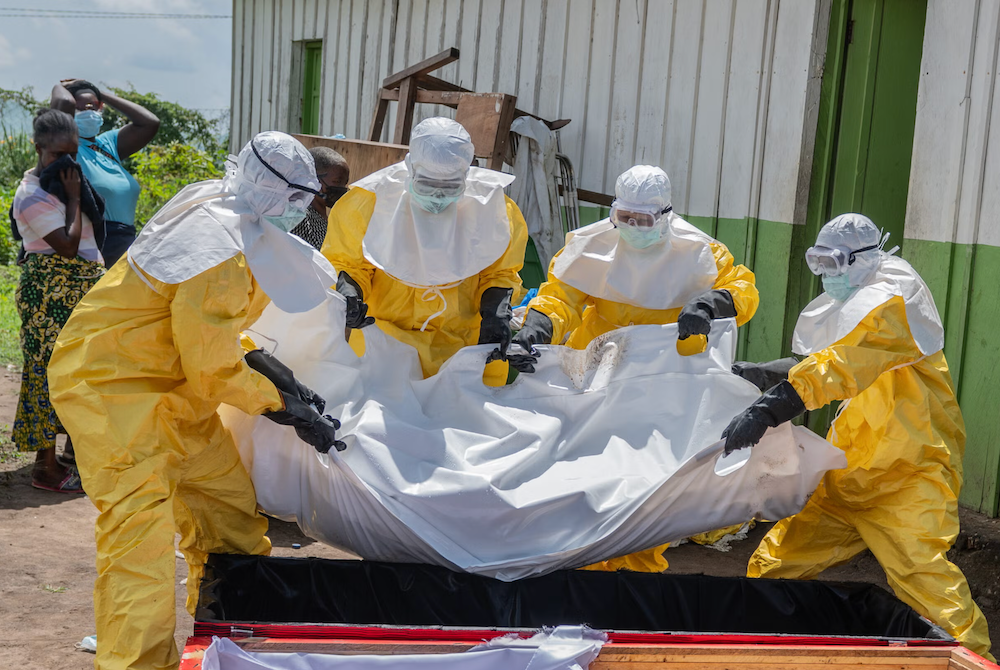
Kenya’s preparedness to contain Ebola is facing renewed scrutiny after the country confirmed its first imported case of Bundibugyo virus disease, with the patient dying in Nairobi days after arriving from the Democratic Republic of Congo (DRC).
Health Cabinet Secretary Aden Duale announced on Tuesday that a Kenyan citizen who had been living in the DRC for seven years had tested positive for Bundibugyo virus disease. The patient fell ill about a month before travelling and had received treatment at several health facilities in the DRC.
He travelled by road from the DRC to Kampala, Uganda, before boarding Jambojet flight 8523 to Nairobi on Saturday, October 3. He arrived at Jomo Kenyatta International Airport at about 1:10 p.m. and was taken to Nairobi Hospital, where he was isolated and assessed.

The patient later tested positive for Bundibugyo virus at both the National Virology Reference Laboratory and the Kenya Medical Research Institute. He received supportive treatment but died on the night of October 5.
The case is Kenya’s first confirmed infection with the Bundibugyo strain and comes after months of heightened surveillance and preparations by health authorities following the outbreak in the DRC and Uganda.
The Ministry of Health says Kenya had screened 652,584 travellers for Ebola as of October 6 and tested 267 samples across five laboratories. Nearly 5,000 health workers had also received training in Ebola prevention and management. Isolation units have been identified and assessed in high-risk counties, while surveillance has been strengthened at points of entry.
The case has nevertheless raised questions about how effectively infections can be detected among travellers, particularly those who may have already developed symptoms before reaching Kenya.
The World Health Organization said Kenya’s response had included screening at high-risk points of entry, case investigation, contact tracing and strengthened surveillance. It said the patient was transported to a Nairobi hospital and isolated soon after arrival.
Health authorities have identified 28 contacts, including family members and health workers who cared for the patient. They are also tracing 23 passengers and four crew members who travelled on the same flight from Uganda. Arrangements are being made for follow-up and quarantine of people considered to be at risk.
The case has also prompted calls for Kenya to reassess aspects of its preparedness, including screening and response procedures at airports and other points of entry.
Professor Omu Anzala, a virologist and member of the National Task Force on Ebola, has called for renewed simulation exercises at borders and airports to identify gaps and ensure response teams are ready to detect and contain further cases.
The Bundibugyo virus is one of the viruses that causes Ebola disease in humans. Unlike the Zaire species of Ebola virus, for which licensed vaccines and specific treatments are available, there are currently no approved vaccines or specific treatments for Bundibugyo virus disease. Candidate vaccines and treatments are being evaluated in clinical trials.
Treatment therefore relies primarily on supportive care to manage symptoms and prevent complications. The virus spreads through direct contact with the blood or other body fluids of an infected person, or through contaminated materials. It is not spread through the air in the way respiratory viruses such as influenza are.
The DRC is currently experiencing the largest recorded outbreak of Bundibugyo virus disease, with transmission spreading across several provinces. The outbreak has also resulted in cases in Uganda and France, while Kenya is now the fourth country to confirm a case linked to the current outbreak.
The scale of the outbreak has made cross-border surveillance a particular concern for countries in the region. WHO says Kenya had already strengthened surveillance, laboratory capacity, isolation facilities and health-worker training before the imported case was confirmed.
Kenyan authorities have urged the public not to panic but to maintain good hand hygiene, avoid close contact with people who are sick and seek medical attention if they develop symptoms, particularly after travelling from areas affected by Ebola.
The government is working with the World Health Organization and Africa Centres for Disease Control and Prevention as it traces contacts and strengthens surveillance.
The imported case will now test Kenya’s ability to rapidly identify any additional infections, monitor exposed people, isolate suspected cases and prevent local transmission.
– John Murunga
