

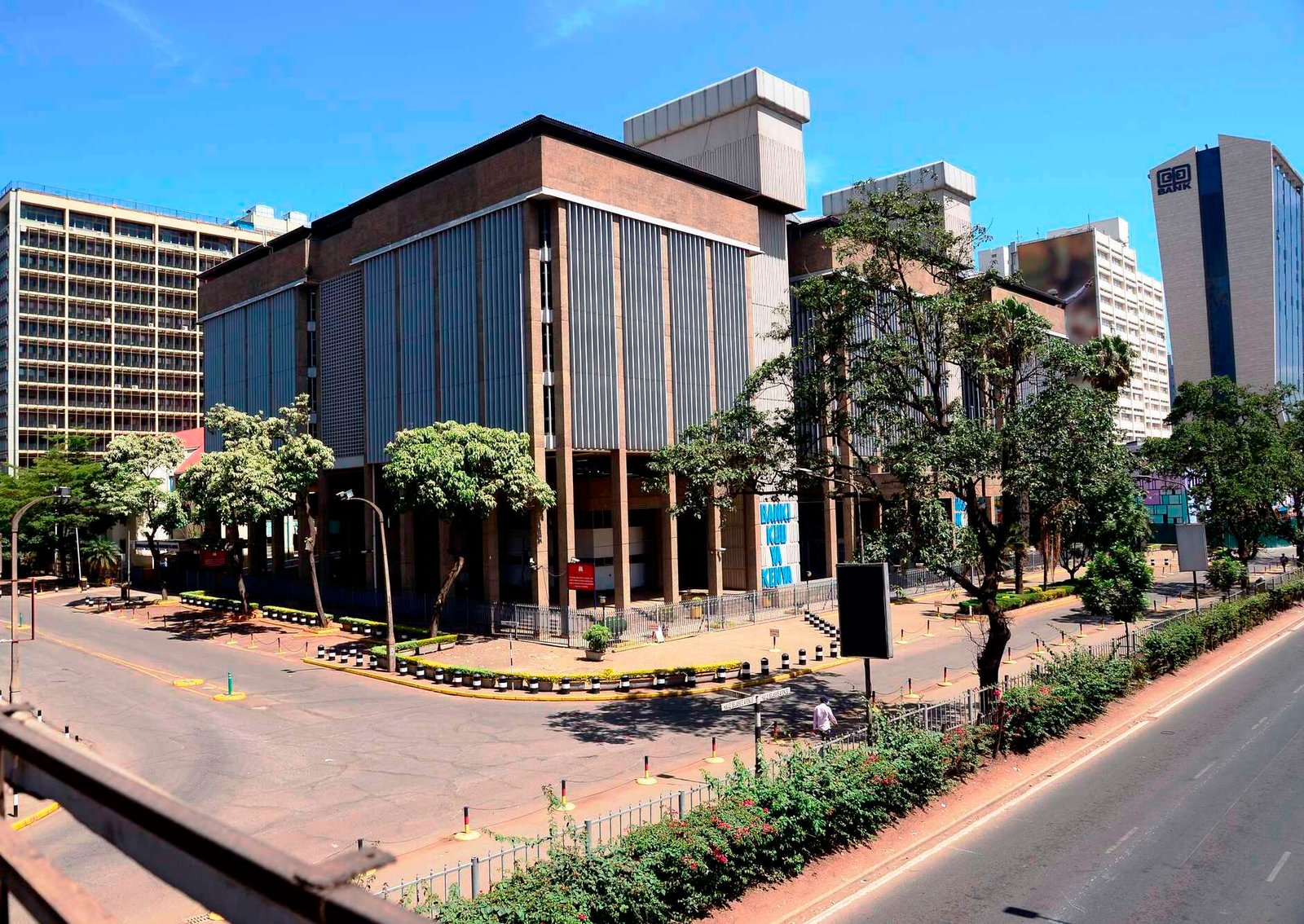
Kenya’s Monetary Policy Committee has held its benchmark lending rate steady, maintaining the Central Bank Rate at 8.75 percent following its meeting on June 9, 2026, amid rising global economic uncertainty.
The decision reflects concerns over escalating geopolitical tensions, particularly the conflict in the Middle East, which has disrupted global supply chains and driven up energy and transport costs.
The MPC noted that these disruptions have contributed to higher global inflation and weaker growth prospects, with global growth projected to slow to 3.1 percent in 2026 from 3.4 percent in 2025.
In its assessment, the Committee warned that elevated trade policy uncertainty and the ongoing Russia–Ukraine conflict continue to pose significant risks to global economic stability.
“Global inflation is expected to increase to 4.4 percent in 2026 from 4.1 percent in 2025 on account of higher energy prices and transport costs attributed to supply chain disruptions from the Middle East crisis,” the Committee stated.
The statement highlighted that inflationary pressures are increasingly being driven by energy markets, with fuel and transport costs feeding into broader price increases across major economies.
In Kenya, inflation rose to 6.7 percent in May 2026 from 5.6 percent in April, largely due to higher global oil prices and increased domestic energy costs.
Despite the rise, inflation remained within the government’s target range of 5±2.5 percent, supported by stable food prices and monetary policy interventions.
Core inflation also increased to 3.2 percent in May from 2.8 percent in April, driven mainly by higher transport costs linked to fuel price increases.
“Overall inflation is expected to remain within the target range in the near term, assuming a de-escalation of the conflict in the Middle East,” the MPC said.
The Committee added that inflation expectations are being anchored by a combination of monetary policy actions, stable exchange rates and government measures such as fuel subsidies and VAT adjustments.
Kenya’s economy continues to show moderate resilience, with growth slowing slightly to 4.6 percent in 2025 from 4.7 percent in 2024, largely due to weaker performance in agriculture and services.
However, the industrial sector recorded stronger growth, supported by construction activity and increased infrastructure spending across key public projects.
Economic indicators suggest improved activity in early 2026, although the growth forecast has been revised downward to 4.9 percent from a previous estimate of 5.3 percent.
The MPC attributed the revision to persistent global uncertainty, particularly prolonged geopolitical tensions affecting trade and energy markets.
Private sector sentiment remains cautiously optimistic, with CEOs citing improved weather conditions, digital innovation and stronger credit growth as key drivers of expected business expansion.
At the same time, businesses expressed concern over high costs of doing business, inflationary pressures and weakening consumer demand across key sectors.
The agriculture survey conducted in May 2026 showed expectations of short-term inflationary pressure, mainly linked to rising global energy prices and fuel costs.
However, respondents still expect inflation to remain within target levels due to favourable weather conditions and exchange rate stability.
On the external sector, Kenya’s current account deficit widened to 2.6 percent of GDP in the 12 months to April 2026, compared to 1.7 percent in the previous year.
The widening was driven by a higher trade deficit, as imports of food, fuel and capital goods increased faster than export earnings.
Despite this, exports rose by 4.2 percent, supported by horticulture, tea, coffee and machinery-related products.
Foreign exchange reserves remain strong at USD 13,203 million, providing 5.6 months of import cover and acting as a buffer against external shocks.
The banking sector also continues to demonstrate resilience, with strong liquidity and capital adequacy levels supporting financial stability.
Non-performing loans declined slightly to 15.3 percent in May 2026 from 15.6 percent in February, reflecting improvements in several key sectors.
Credit to the private sector has improved significantly, growing by 9.3 percent in May compared to 7.1 percent in April, supported by lower lending rates.
Average lending rates have also eased to 14.5 percent, down from 17.2 percent in late 2024, improving access to credit for businesses and households.
The Committee noted ongoing government fiscal consolidation efforts under the FY2025/26 supplementary budget, aimed at reducing debt vulnerabilities over the medium term.
Overall, the MPC concluded that the current monetary policy stance remains appropriate to anchor inflation expectations while supporting economic stability.
It said it will continue monitoring global oil prices, geopolitical risks and domestic inflation dynamics, and remains ready to take further action if necessary at its next meeting in August 2026
