

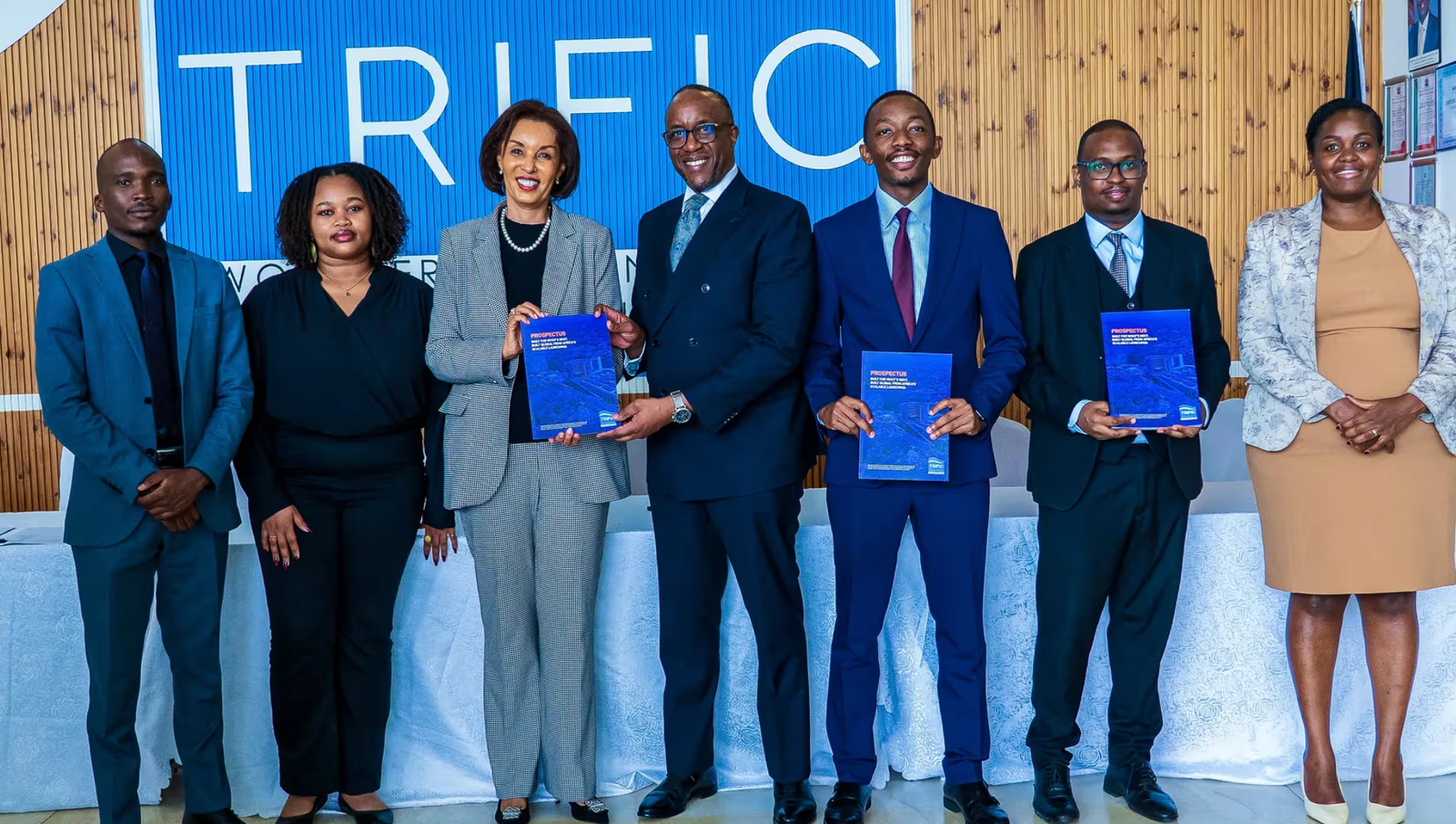
Kenya’s push to position itself as a regional financial and innovation hub has received a major boost after the Two Rivers International Finance and Innovation Centre (TRIFIC) launched a Sh4.8 billion ($37.3 million) green, dollar-denominated Income Real Estate Investment Trust (I-REIT).
The move by the subsidiary of Centum Investment Company Plc marks one of the country’s most ambitious attempts to merge sustainable real estate financing with global capital markets.
The offer, which opened on May 13 and closes on June 12, is targeting both local and international investors seeking stable dollar returns amid currency volatility and rising demand for environmentally sustainable commercial developments in Africa. The minimum subscription has been set at Sh129,000 ($1,000).

Proceeds from the REIT will primarily finance the acquisition of the TRIFIC North Tower and support the development of additional green-certified commercial towers within the Special Economic Zone located at Two Rivers in Nairobi.
An Income Real Estate Investment Trust allows investors to pool capital into professionally managed, income-generating properties without directly owning or operating the assets. Investors earn returns primarily through rental income distributions, while also benefiting from potential long-term capital appreciation.
This development comes at a time Kenya’s built environment is increasingly shifting toward institutional-grade developments tailored for multinational corporations, technology firms and business process outsourcing companies seeking modern office space aligned with global environmental standards.
The new REIT would become one of Kenya’s first green, USD-denominated, income-distributing REITs, effectively creating a new asset class in the local market for investors looking for hard-currency exposure combined with recurring income streams.
“The TRIFIC I-REIT represents a significant milestone in deepening Kenya’s capital markets while attracting long-term sustainable investment into world-class commercial infrastructure,” the company said in a statement.
Unlike traditional commercial property developments that largely depend on local currency financing, the structure of the REIT is designed to align revenues and investor returns in dollars, an increasingly attractive proposition in emerging markets where currency depreciation remains a key concern for investors.
The development also signals Kenya’s growing ambition to compete with established African business hubs such as Dubai International Financial Centre, Kigali International Financial Centre and Mauritius by attracting export-oriented service industries into special economic zones offering tax incentives, premium infrastructure and international connectivity.
Experts in the sector say the move reflects broader shifts in commercial real estate where sustainability, energy efficiency and environmental certification are becoming central to attracting global tenants and institutional investors.
“Green-certified buildings are increasingly commanding premium valuations because multinational occupiers are under pressure to meet their own sustainability commitments,” noted Morris Otieno, a Nairobi-based property analyst.
The launch also highlights the increasing use of capital markets to finance large-scale infrastructure and property developments outside conventional bank lending, especially as developers seek cheaper and longer-term funding sources.
Kenya’s REIT market has historically struggled with low uptake and limited product diversity, but industry players believe dollar-denominated structures linked to income-generating assets could revive investor interest.
