

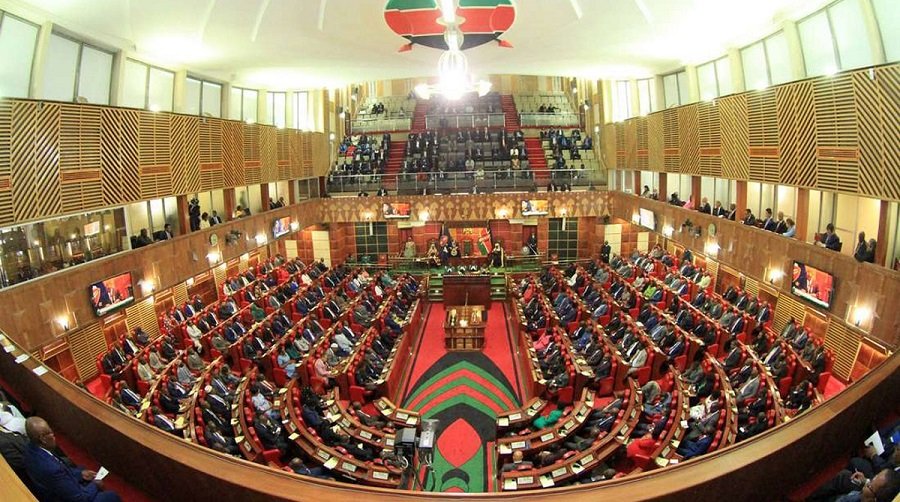
The National Assembly has passed the Finance Bill 2026, clearing the way for it to be transmitted to President William Ruto for assent, even as lawmakers approved a package of controversial tax measures expected to raise about Sh98.5 billion in additional revenue.
The Bill was adopted on Thursday evening, after MPs voted electronically, with 122 members supporting it and 40 opposing it. No member abstained. The vote followed an earlier attempt to pass the legislation by acclamation before a division was called and a formal electronic tally ordered by the Speaker.
The legislation, which amends key tax laws including the Income Tax Act, Value Added Tax Act, Excise Duty Act and Tax Procedures Act, is intended to broaden the tax base and strengthen revenue collection to finance the Sh4.82 trillion 2026/27 budget. The National Treasury had initially targeted Sh120 billion from the proposals, but amendments reduced the expected yield.

The Bill was passed largely in line with recommendations from the National Assembly Finance and National Planning Committee, chaired by Molo MP Kuria Kimani, after MPs removed several contentious provisions.
Outside Parliament, economists, bankers and industry stakeholders had warned that some of the proposals risked increasing the cost of living and placing additional pressure on already strained households.
Among the key decisions, MPs approved a tax exemption for investments of at least Sh2 billion, aimed at attracting large-scale manufacturing investment, though concerns were raised that it could favour capital-rich foreign investors.
Lawmakers also rejected Treasury proposals to increase excise duty on imported mobile phones from 10 per cent to 25 per cent and to impose a tax at the point of activation, opting instead to retain the current import-stage taxation framework.
However, MPs backed an increase in import duty on sugar to Sh40 per kilogramme from Sh7.50 in a move aimed at protecting local producers, despite warnings that it could raise retail prices due to Kenya’s production deficit.
Kenya produces between 650,000 and 850,000 metric tonnes of sugar annually against a demand of about 1.15 million tonnes, forcing annual imports of up to 510,000 metric tonnes.
The House also approved changes to tax return filing timelines, setting a four-month window after the end of the financial year, meaning taxpayers will now have until October 31 to file returns.
MPs further rejected proposals to shift several essential goods and green energy products from VAT zero-rated to VAT-exempt status, citing concerns that the move would raise production costs and undermine local manufacturing.
The committee warned that “reversing this position would increase production costs, discourage investment and undermine predictability in the tax system,” while also maintaining that “maintaining the zero-rated status of sugarcane transportation supports the government’s agenda of revitalising the sugar industry by allowing farmers to recover input VAT and avoid additional costs.”
Lawmakers also blocked attempts to tax electric bicycles, buses, solar batteries and lithium-ion batteries, with MPs arguing that the move would “increase the cost of environmentally friendly transport and energy products, thereby discouraging the adoption of sustainable energy solutions and undermining Kenya’s green economy agenda.”
On sugar policy, MPs raised import duty to protect local millers, though some legislators warned that consumers would ultimately bear the cost.
“Local consumers are likely to be hit hard because we solely depend on imported sugar to bridge the local deficit,” Embakasi East MP Babu Owino said.
Kathiani MP Robert Mbui supported protection of local producers but cautioned that “as you protect local farmers by imposing a higher duty, you also need to address the factors that make our products uncompetitive.”
Attempts to allow the Kenya Revenue Authority (KRA) to collect disputed taxes pending appeal were withdrawn after strong opposition from MPs.
The passage of the Bill now sets the stage for presidential assent and implementation in the next financial year, even as debate continues over its impact on households, industry and inflationary pressures.
