

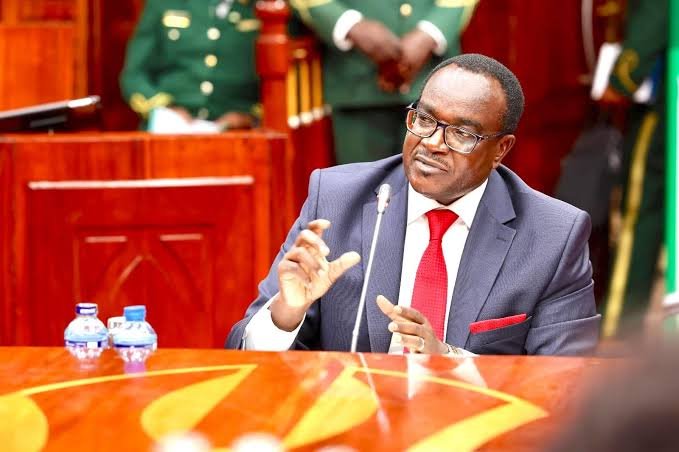
Public universities are facing an escalating financial crisis as rising salary costs, inadequate government funding and mounting obligations threaten their ability to sustain operations, Education Cabinet Secretary Julius Ogamba has warned.
Appearing before the National Assembly’s Public Investments Committee on Education, Ogamba said the institutions are struggling to meet salary obligations while maintaining teaching, research, infrastructure development and student support services.
He attributed the crisis to a combination of rising personnel costs, delayed Exchequer disbursements and financial obligations arising from nationally negotiated Collective Bargaining Agreements (CBAs).
“The wage-bill challenge is therefore not attributed to a single factor. It arises from the interaction between the cost of maintaining the workforce required to deliver university education, the financial obligations from the nationally negotiated CBAs, and the overall resources available to the public universities,” the CS said.
The extent of the crisis is evident in the widening funding gap for the 2025/26 financial year.
Ogamba said public universities require Sh70.39 billion to operate, but only Sh41.42 billion has been allocated, leaving a deficit of Sh28.97 billion that threatens their financial stability.
Of the required amount, universities need Sh29.92 billion through the Universities Fund but have been allocated Sh18.42 billion, creating a shortfall of Sh11.5 billion.
Under the Differentiated Unit Cost (DUC) model, institutions require Sh40.47 billion but will receive only Sh23 billion, leaving another funding gap of Sh17.46 billion.
Ogamba said while universities are legally required to comply with approved budgets, the persistent mismatch between available resources and expenditure has left many institutions struggling to remain afloat.
He noted that the wage bill has emerged as the single biggest pressure on university finances, but stressed that it is compounded by delayed government funding and other recurrent operational costs.
To ease the burden, the government has released Sh3.88 billion towards settling part of the 2017–2021 CBA arrears, with another Sh3.88 billion scheduled for release in July.
An additional Sh2.73 billion has also been committed for the 2021–2025 CBA.
The government has further allocated Sh1.5 billion to universities through a supplementary budget to support CBA implementation, while the Higher Education Loans Board (HELB) received an additional Sh4.1 billion, increasing its budget to Sh45.6 billion.
However, Ogamba cautioned that financial support alone will not resolve the crisis unless future salary agreements are negotiated within the country’s fiscal capacity.
He urged all parties involved in CBA negotiations to ensure that wage commitments are affordable and sustainable, warning that failure to align salary obligations with available resources will continue to undermine the stability of Kenya’s public universities.
– By Regan Oluoch
