

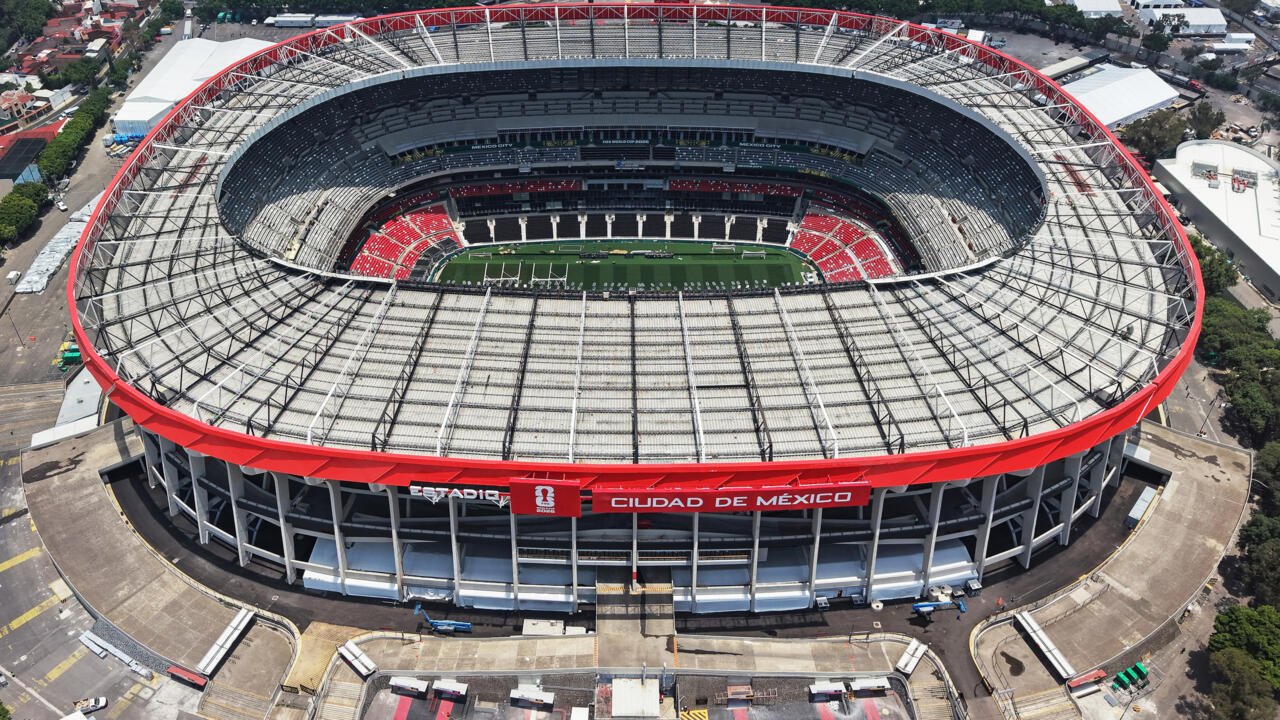
The World Cup kicks off on Thursday with FIFA hoping that the enduring appeal of soccer’s greatest showpiece can rise above the anger at soaring ticket prices, an uneasy political climate in the United States and the shadow of conflict in the Middle East.
A record 48 teams and millions of fans are set to descend on the United States, Canada and Mexico for the first-ever World Cup co-hosted by three nations, the largest and most logistically complex edition of the tournament ever staged.
The action gets under way at Mexico City’s iconic Estadio Azteca on Thursday, with co-host Mexico taking on South Africa at 3 pm local time (3 am Friday, Beijing time), launching a sprawling, nearly six-week-long spectacle that will culminate in the final at New Jersey’s 82,500-seat Met-Life Stadium on July 19.
Can Lionel Messi, at the age of 38, settle any lingering debate about his status as the greatest player of all time by leading Argentina to a second consecutive World Cup title?
Or can Messi’s great rival, the 41-year-old Cristiano Ronaldo, defy father time by inspiring a talented Portugal team to its maiden World Cup win?
Or will England, led by Harry Kane, finally end the country’s 60-year wait for a second major international championship following its lone 1966 World Cup victory?
Those questions and more will be answered over the course of a tournament that Gianni Infantino, the president of world soccer’s governing body, has bullishly hyped as “the greatest show that the planet has ever seen”.
Ticket fury
Yet Infantino’s breezy optimism has run into hurricane-force headwinds of skepticism during a buildup dogged by concerns over affordability, politics and conflict.
The skyrocketing cost of tickets to the tournament has triggered a global backlash that has left FIFA and Infantino struggling to mount a convincing public relations defense.
The most expensive ticket for the 2022 World Cup final cost around $1,600 at face value; in 2026 the most expensive face value ticket being sold by FIFA is an eye-watering $32,970.
That kind of inflation has been prevalent across the tournament’s 104 matches, where seats for many games remain available on secondary resale markets despite supposedly huge demand.
Even Infantino’s staunch ally, US President Donald Trump, has balked at the cost, reacting with surprise when told of the $1,000 price tag for tickets to the USA’s opening game with Paraguay in Los Angeles on Friday — the first game on US soil.
“I wouldn’t pay it either, to be honest with you,” the US president told the New York Post.
While fans absorb the expense of travel to the tournament, other critics have questioned whether the World Cup party will be soured by the political climate in the United States.
Human Rights Watch says Trump’s crackdowns on immigration, demonstrations and press freedom could lead to a World Cup defined by “exclusion and fear”.
Those fears were fueled Monday when FIFA dropped a Somali referee from the World Cup after he was denied entry to the United States.
Omar Artan was set to be the first match official from Somalia to referee a match at a global finals, but he was turned back following his arrival at Miami International Airport on Saturday.
FIFA said it was powerless to influence the decision and announced it had omitted Artan from its 52-strong referee roster.
The US-Israel military strikes launched against Iran in February have also loomed large over the tournament, where Iran is due to play three group games in the US, starting with its opener against New Zealand on June 15.
Trump initially suggested Iran should withdraw from the tournament for its own “life and safety”, before walking back his rhetoric.
Iran, meanwhile, has switched its base camp from Tucson, Arizona, to the Mexican city of Tijuana, where it touched down early Sunday.
While Iran’s players are free to travel in and out of the US, some 15 administrative and management staff have been denied visas by US authorities in a move Iranian authorities have condemned as “deliberate and discriminatory treatment”.
Expanded field
On the field, the decision to expand the tournament to 48 teams — up from 32 in 2022 — is likely to strip the group stage of any sense of jeopardy.
A total of 72 first-round matches will be needed to eliminate just 12 teams, with 32 advancing to the knockout rounds — the top two finishers in each of the 12 first-round groups along with the eight best third-place finishers.
The tournament will see a range of other innovations.
For the first time in World Cup history, every game will feature cooling breaks in the middle of each half, a measure designed to mitigate the effects of searing heat and humidity expected at many of the tournament’s 16 venues.
Players and referees will need to adjust to several new rules being rolled out at the World Cup, including teams being required to make substitutions inside 10 seconds to prevent time-wasting.
A crackdown on racist abuse will see players risk a red card for covering their mouth with a hand, arm or shirt during a confrontation with an opponent.
Next month’s final, meanwhile, could well be the longest on record due to the decision to stage a Super Bowl-style halftime show, headlined by Madonna, Shakira and BTS.
The show means the halftime interval will be stretched from the traditional 15 minutes to around 25 minutes.
– AFP
