

By Otieno Bildad
World’s largest electric two-wheeler manufacturer, Yadea, has entered the Kenyan market, marking a significant expansion in the country’s rapidly growing e-mobility sector.
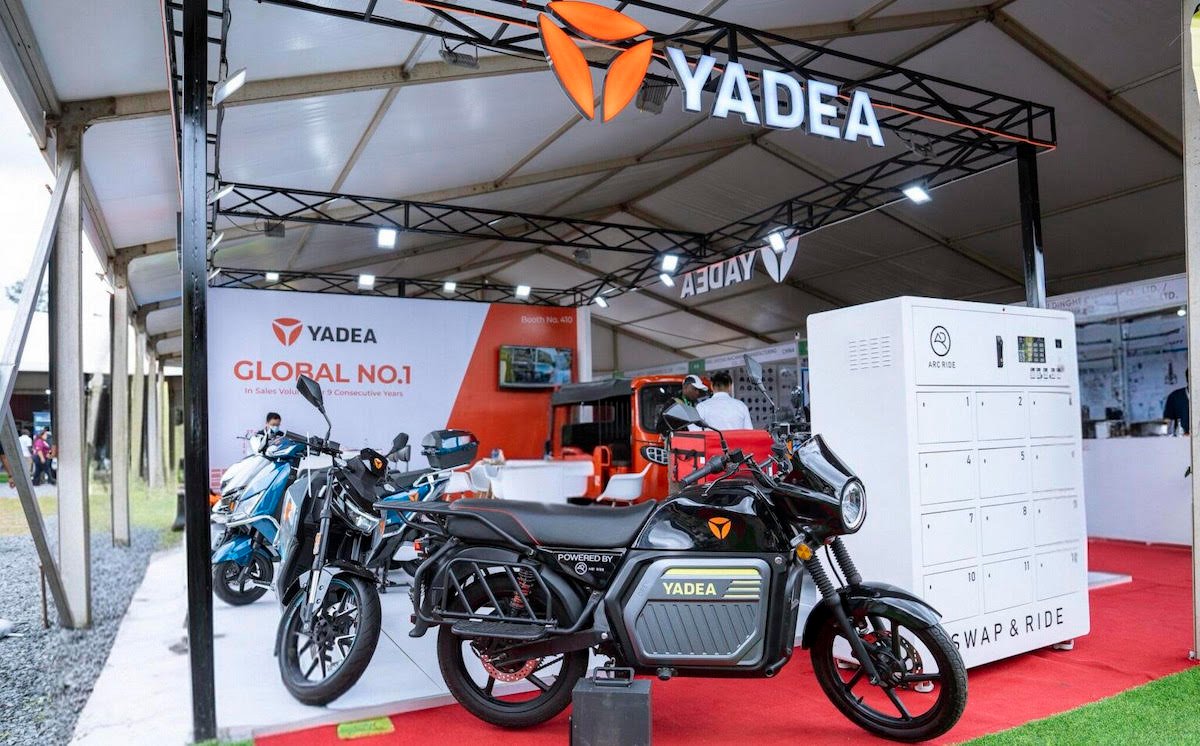
Unveiling its operations at Autoexpo Kenya 2026 in Nairobi on June 4, the Chinese company introduced five electric motorcycle models tailored for the local boda boda industry, personal commuters, and last-mile logistics providers.

This move establishes Kenya as Yadea’s second foothold in East Africa, following a three-year presence in Ethiopia, where the company reports having sold over 48,000 units.
Central to Yadea’s Kenyan launch is the KIFA, a commercial electric motorcycle designed for cargo transport and durability.
The KIFA features a reinforced cargo system with a claimed payload capacity of up to 250 kilograms and is powered by dual removable 72V lithium iron phosphate batteries, offering a range of up to 150 kilometers.
To address downtime among commercial riders, Yadea has partnered with local infrastructure provider ARC Ride to facilitate battery swapping.
This collaboration allows riders to exchange depleted batteries for fully charged ones in approximately 30 seconds, reflecting the growing emphasis on energy infrastructure as a competitive factor in the sector.
Yadea’s entry introduces new competition to a market already populated by established players such as Spiro, Roam Motors, and Kibo Africa.
Unlike some competitors that have leveraged local assembly to benefit from tax incentives, Yadea will distribute fully assembled units through local dealerships, with prices reaching up to $3,000 (KSh 388,200), depending on the model.
This pricing strategy places it at a potential disadvantage compared to locally assembled rivals, which benefit from reduced import duties and VAT exemptions. However, the company is betting on its global manufacturing scale and the long-term operational savings of electric mobility to attract operators.
Competition in the sector is increasingly shifting from vehicle sales to control of battery-swapping networks that keep fleets operational. Spiro recently secured $215 million to expand its infrastructure across the continent.
The arrival of such a major global manufacturer elevates Kenya’s position as a critical hub for electric mobility in Africa, where electric motorcycles accounted for nearly 32,000 of the country’s 43,324 registered electric vehicles by the end of 2025.
However, the sector faces potential setbacks from the proposed Finance Bill 2026, which seeks to alter the VAT status of electric motorcycles and batteries, potentially impacting the costs that have encouraged adoption.
