

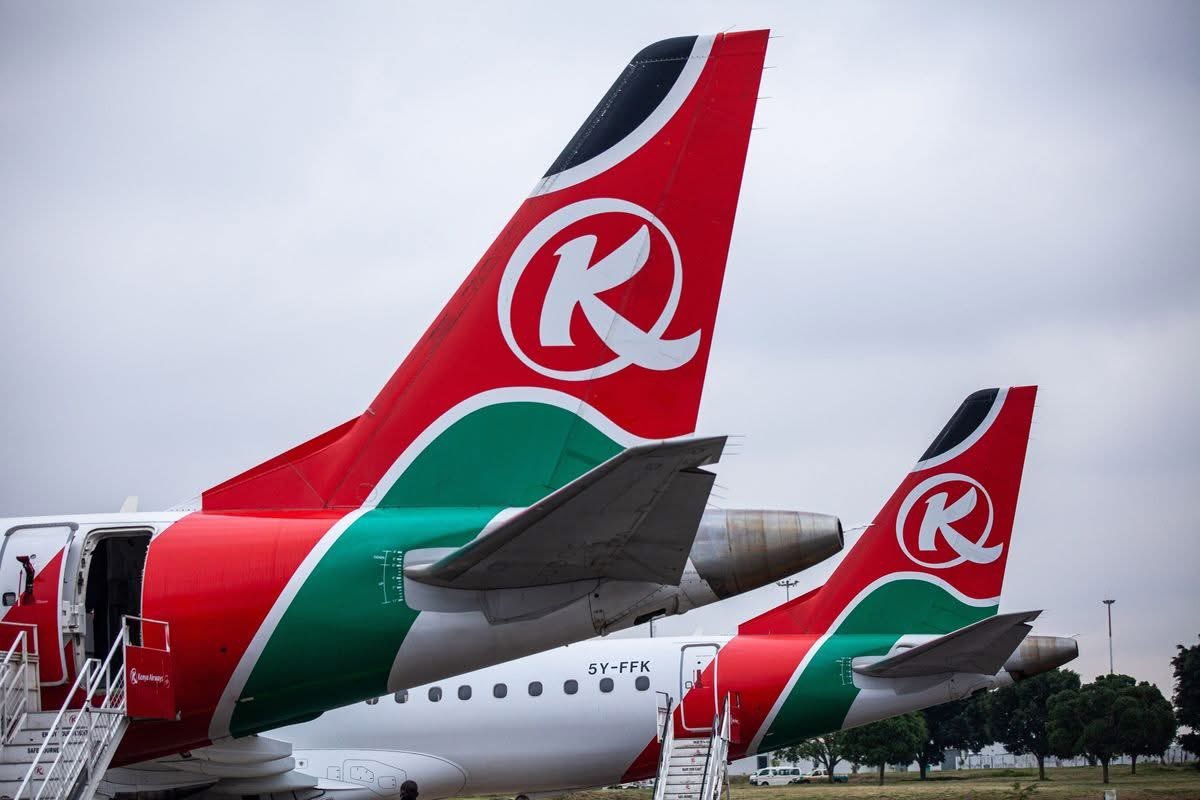
Kenya Airways’ net loss for the six months to June 2026 widened by 31.9 per cent to Sh16 billion, after operating costs climbed to a record level on the back of the Middle East conflict’s impact on global fuel prices.
The national carrier’s total costs rose 12 per cent during the period to a record Sh97.7 billion, up from Sh86.7 billion a year earlier, pushing the loss up from the Sh12.2 billion recorded in the first half of 2025.
The bulk of that increase came from fuel, with expenses jumping 66 per cent to Sh29 billion, now accounting for roughly 32 per cent of the airline’s operating costs and more than half of its direct operating costs, up from 22 per cent in the same period last year.

“Our costs increased significantly because of the Middle East crisis, which increased our fuel costs,” said KQ Chief Financial Officer Mary Mwenga.
According to the International Air Transport Association, jet fuel prices in Africa rose to the second-highest of any region globally as a result of the Middle East crisis, peaking at around $220 (Sh28,470) per barrel in April before easing to about $150 (Sh19,411), a level that still sits well above historical norms.
Mwenga said that, stripped of the fuel price spike, the airline’s losses would have held steady at Sh12.2 billion, pointing instead to genuine underlying commercial improvement: turnover defied a broader global slump in aviation demand, rising 9 per cent to Sh81.2 billion from Sh74.5 billion, helped by stronger passenger numbers and demand on key routes, as international travellers rerouted through African corridors during the Middle East shutdown.
The airline continues to battle a capacity problem that has now persisted for two consecutive years. Last year’s losses were driven largely by the prolonged grounding of at least two wide-body aircraft; this year, two of its 248-seater Boeing 787 Dreamliners and several Boeing 737s remained out of service for maintenance, alongside some of the Embraer jets it operates on regional routes.
Acting Chief Executive George Kamal explained that much of the fleet was delivered around the same time, meaning several aircraft are now due for major maintenance simultaneously. “There has also been a shortage of spare parts because original equipment manufacturers (OEMs) are struggling to meet demand for parts,” he said.
That capacity shortfall meant KQ could not fully capitalise on strong demand on its most lucrative long-haul routes, including London and New York, both of which recorded load factors above 90 per cent.
Overall, the airline’s load factor for the half-year improved by 3.9 percentage points to 76.3 per cent, evidence of healthy underlying demand, even as its available seat kilometres, the standard measure of passenger-carrying capacity, fell 9 per cent to 6.08 billion.
Block hours, the total time its aircraft spent flying, dropped 8 per cent to 65,978 hours from 72,040 hours a year earlier.
“What Kenya Airways faces today is not a demand problem but a capacity problem. Kenya Airways has been through an exceptionally difficult period,” said KQ board chairman Kiprono Kittony, adding that the combined pressures of fuel costs, aircraft availability and rising operating expenses had squeezed margins and overall network profitability.
There were signs of recovery on the fleet front by mid-year: a Boeing 787-8 Dreamliner returned to service in mid-July, while a Boeing 777-300ER was redelivered to the airline and re-entered operations, both aircraft of which were reportedly well received commercially upon returning to the schedule.
Cargo has emerged as a genuine bright spot in an otherwise difficult set of results. Cargo revenue rose 18 per cent to Sh8.77 billion, growing faster than the airline’s overall revenue and helping cushion the top line against a tough cost environment.
KQ said it is now targeting an increase in its share of the cargo market from 11 per cent to 40 per cent, partly through a capacity purchase arrangement involving a Boeing 747, as the carrier leans on cargo and Maintenance, Repair and Overhaul operations to help drive its return to profitability.
The half-year loss also weighed further on KQ’s balance sheet. Liabilities increased by Sh12.86 billion during the period, widening the airline’s negative equity position by Sh15.79 billion, while total assets shrank 1.6 per cent to Sh180.3 billion, with non-current assets down 3.9 per cent to Sh136.32 billion, partially offset by a 6.2 per cent rise in current assets to Sh43.97 billion.
At Sh16.08 billion, the half-year loss came within Sh1.1 billion of the airline’s full-year net loss of Sh17.2 billion recorded for the whole of 2025, a year KQ has attributed primarily to the temporary grounding of three of its wide-body Boeing 787-8 Dreamliners for engine overhauls.
